We commissioned a 120 kW DC charging station at İbn Haldun University
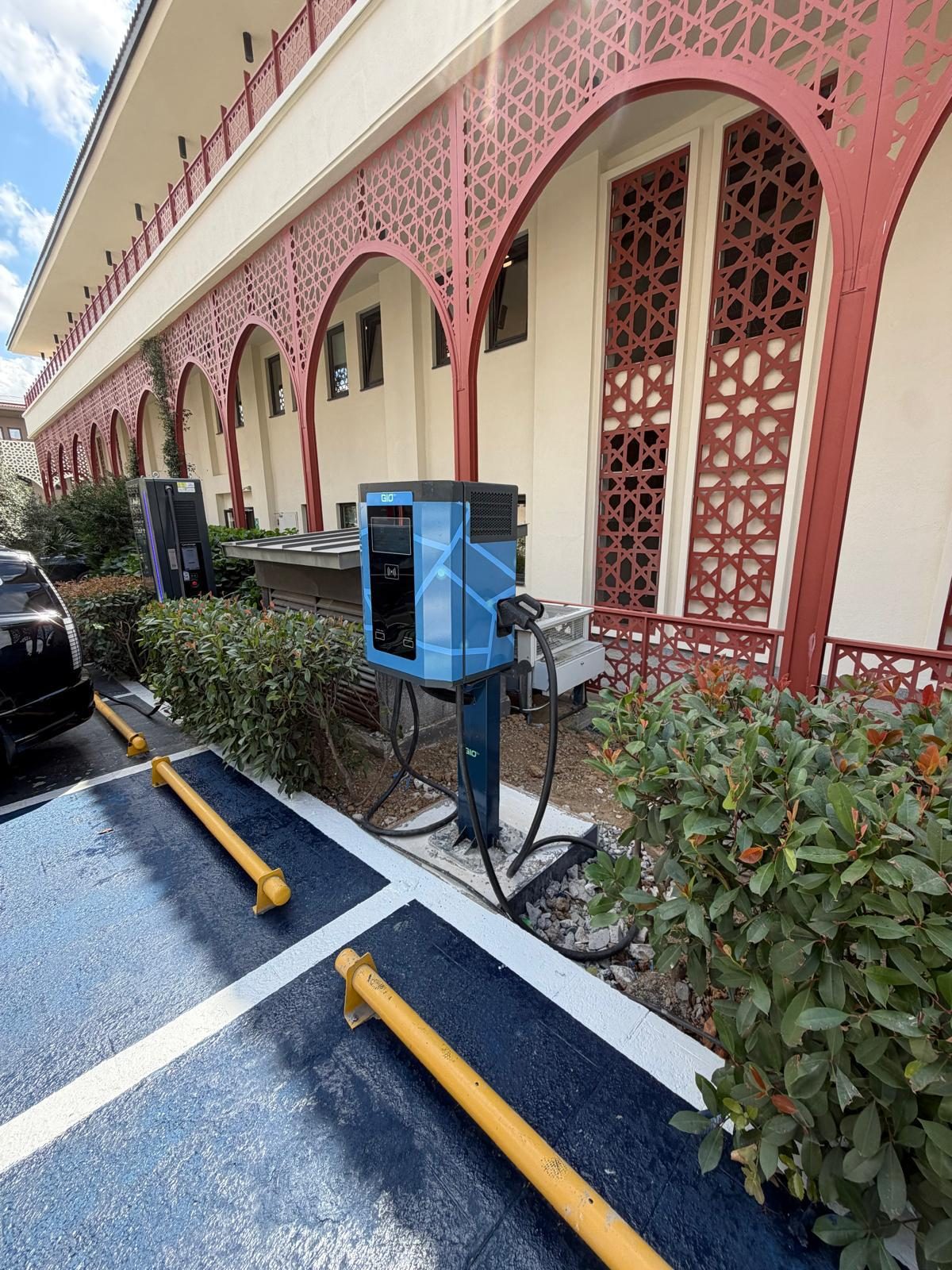
At DBE Energy, we have completed the installation and commissioning of a BLUETECH EV BT130 DC fast charging station with 120 kW output power for the GIO EV charging network at the Rectorate campus of İbn Haldun University in Başakşehir, İstanbul. The station offers EV drivers visiting the campus fast charging on site, so the time they spend on campus can also be used to charge their vehicles.
University campuses bring together students, academics, administrative staff and visitors every day and have their own distinctive patterns of mobility. This setting gives charging infrastructure the opportunity both to serve different user profiles and to make electric mobility visible as a natural part of everyday life. Below, we share the station's features, the commissioning process and what charging infrastructure means in a campus environment.
Station features
The station has 2 tethered CCS2 charge points. The BLUETECH EV BT130 unit falls into the DC fast charging class with its 120 kW output power. In DC charging, the alternating current from the grid is converted into direct current inside the station and delivered directly to the battery, so the vehicle can be charged much faster than with AC charging.
The CCS2 connector used at the charge points is the DC fast charging standard widely used in Türkiye and the European market. As a result, most drivers arriving on campus with different makes and models can use the station without an additional adapter. Because the cables are attached to the station, users also don't need to carry a cable with them.
The 120 kW output power is the maximum the station can deliver. The power a vehicle actually receives depends on its DC charging acceptance capacity and on the battery's current state of charge and temperature. This power level offers a balanced solution, allowing a meaningful share of the battery to be charged during a class, meeting or visit on campus.
How charging is used on campus
On a university campus, vehicles are usually parked for a set period: the length of a class, a meeting, a seminar or time spent in the library. This pattern of use aligns naturally with the advantage of DC fast charging; while drivers finish what they came to campus for, their vehicles can be ready for the road again.
The campus's user profile is also highly diverse. Academics and administrative staff come to campus regularly, while students are on campus at varying times of day depending on their class schedules. Visitors, guest academics and event participants follow a less regular pattern. The fast charging station provides infrastructure flexible enough to meet each of these different needs.
Locating the station at the Rectorate campus, which houses the university's administrative center, also makes it a practical option for guests coming to the university for meetings, official visits or events. A visitor arriving by car can charge during their program and set off on the return journey with greater peace of mind.
Fast charging at the destination
Charging infrastructure is generally divided into categories based on how it is used. Charging during long periods of parking at home or at work can be handled by lower-power AC units. Charging at places where people spend a certain amount of time, such as shopping malls, hotels or campuses, is known in the industry as destination charging. Fast charging stations along highways help extend range with short stops on intercity journeys.
The station at İbn Haldun University combines the convenience of destination charging with the power of DC fast charging. While time spent on campus may be too short for AC charging, a 120 kW DC unit can deliver much more energy to the battery in the same period. This creates a meaningful charging opportunity both for a visitor stopping by campus briefly and for an academic who spends most of the day there.
Another benefit of offering fast charging at destinations is that charge points can serve more users through shorter sessions. A driver whose vehicle charges quickly frees up the charge point sooner for the next user, which ensures efficient use of the infrastructure where the number of charge points is limited.
The commissioning process
Following installation, the station was connected to our central monitoring system on August 4, 2026. The first charging session took place on August 10, 2026.
Commissioning a charging station consists of successive stages that follow the physical installation. Once the electrical connection is complete, the unit's safety and operational checks are performed, and the station is registered in the central management system and made remotely monitorable. For high-power DC units, these checks generally include verifying the grounding, insulation and protective equipment and testing the cooling system and communication link. Connection to the central monitoring system is a critical step that makes the station's operating status, charging sessions and any alerts visible centrally.
The first charging session marks the stage at which the station actually begins service by delivering energy to a vehicle. From then on, what matters to EV drivers is that the station is easy to find in the app and working whenever they need it. Our work during the operation period focuses on this goal.
Operation and maintenance
The station's operation, maintenance and 24/7 remote monitoring are carried out by DBE Energy teams. EV drivers can use the station through the GIO EV app.
In this setup, GIO EV reaches users as the EV charging app and charging network where drivers find the station and start their charging session. Behind the scenes, DBE Energy handles the station's on-site installation, commissioning, operation and maintenance. This division of labor allows the user experience and technical continuity to be managed within their respective areas of expertise.
High-power DC charging units are equipment that requires regular maintenance, with components such as power electronics, cooling systems, cables and connectors. In general industry practice, scheduled maintenance covers physical inspection of connectors and cables, cleaning of the cooling system and filters, and checks of electrical connections. 24/7 remote monitoring keeps the station's status continuously visible between scheduled maintenance visits. At a campus station used at different times throughout the day, this continuity is valuable because it allows a potential problem to be addressed before users are affected.
The place of electric mobility on campus
Universities are places where new technologies are encountered and discussed early on. A fast charging station that is visible on campus every day turns how EVs are charged, how long charging takes and how a charging app is used from abstract information into a hands-on experience for students and academics.
Access to charging infrastructure is one of the main considerations for drivers deciding to switch to an EV. Having fast charging available at a place they visit regularly, such as the campus where they work or study, is one of the factors that makes this decision easier. For academics and staff who come to campus regularly, the on-campus station can become part of their daily charging routine.
On-campus charging infrastructure can also help raise awareness of sustainable transportation. As many universities put topics such as energy efficiency and sustainable transportation on their campus management agenda, charging infrastructure stands out as one of the tangible expressions of these themes. In an environment where new generations are shaping their transportation choices, seeing EVs in everyday use makes it easier to be part of the transition. With the station at İbn Haldun University, we have added a new fast charging point in Başakşehir for GIO EV users.