13 new plants totaling 93.3 MWp joined our operation and maintenance portfolio in 2026
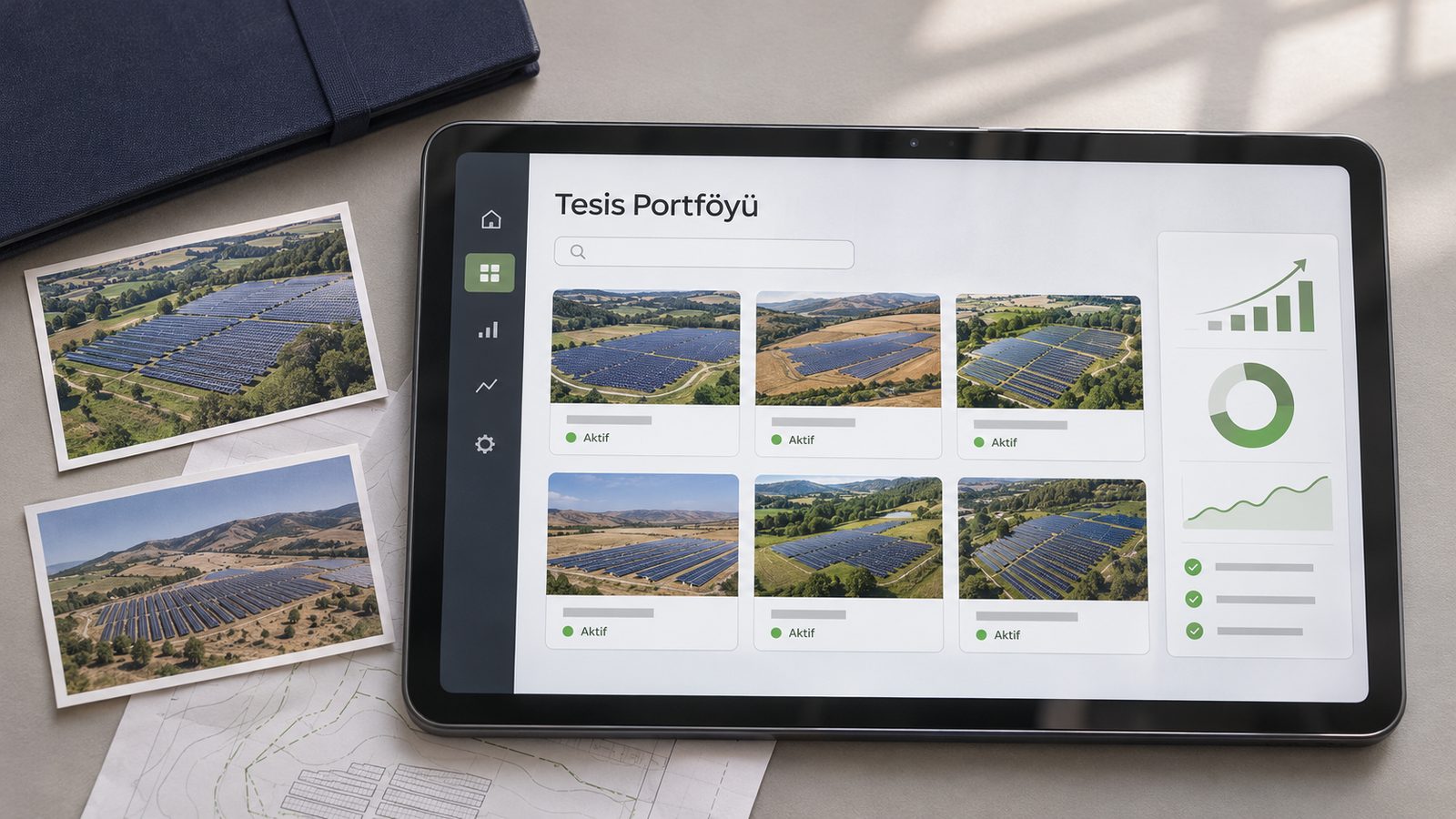
At DBE Energy, we significantly expanded our operation and maintenance portfolio in 2026. Thirteen solar power plants in Uşak, Van, Balıkesir, Yozgat, Karaman, Mersin, Ankara and Denizli, with a total installed capacity of 78.01 MWe AC and 93.28 MWp DC, were brought under our operation.
The plants joining the portfolio operate in different regions, at different scales and with different site layouts. In this article, we present the new facilities, the regional organizations we set up alongside this growth, and what the services we provide to the plants mean for investors.
AC and DC installed capacity
At solar power plants, installed capacity is usually expressed separately for the DC and AC sides. MWp, or megawatt-peak, indicates the total peak power the panels can reach under standard test conditions and defines the plant's DC side. MWe refers to the plant's electrical output power, in other words, the AC power that can be delivered to the grid through the inverters.
Across the plants added to our portfolio, total DC installed capacity exceeds AC installed capacity, reflecting a common design choice in the industry. Since panels operate below their peak power for most of the day, sizing the DC side somewhat larger helps the inverters operate in their efficient range for longer. The figures of 93.28 MWp DC and 78.01 MWe AC should therefore be read as complementary values.
This distinction also matters for operation and maintenance. Checks on the panel side focus on the health of the DC system, while inverter, switchboard and transformer checks aim to maintain the continuity of the AC side. To evaluate a plant's performance accurately, the DC and AC sides must be monitored together.
While the power that can be delivered to the grid is limited by the AC value, the installed capacity on the panel side determines how evenly energy can be generated throughout the day. In performance analyses, generation data is therefore interpreted with both the DC and AC capacity of the plant in mind; otherwise, a plant's actual performance may appear different from what it really is.
Plants added to the portfolio
The plants brought under our operation in 2026 and their DC installed capacities are as follows: <ul><li>Karaman Kazımkarabekir: Sinci 1, 2 and 3 SPP (24.8 MWp)</li> <li>Ankara Polatlı: Sinanlı SPP (16.3 MWp)</li> <li>Mersin Gülnar: AKM 1, 2 and 3 SPP (12.1 MWp)</li> <li>Balıkesir Gönen: Gönen SPP (11.8 MWp)</li> <li>Yozgat Yerköy: Yerköy 1 and 2 SPP (9.3 MWp)</li> <li>Van İpekyolu: İpekyolu 1 and 2 SPP (8.7 MWp)</li> <li>Uşak Ulubey: Ulubey 1 and 2 SPP (7.7 MWp)</li> <li>Denizli Çivril: Faunus 2 SPP 1 (2.5 MWp)</li> </ul> One notable feature of the list is that several locations host more than one plant. Sinci 1, 2 and 3 SPP in Karaman Kazımkarabekir and AKM 1, 2 and 3 SPP in Mersin Gülnar are examples of this, and Yozgat Yerköy, Van İpekyolu and Uşak Ulubey also have more than one plant each. Plants at the same location allow teams and resources to be used more efficiently in maintenance planning.
There is also marked diversity in scale. The plants in Karaman Kazımkarabekir form the largest cluster on the list with a total of 24.8 MWp, while the 2.5 MWp Faunus 2 SPP 1 in Denizli Çivril joined the portfolio as a smaller facility. Plants of different sizes require monitoring and maintenance services to be tailored to the needs of each facility.
A portfolio spanning different regions
The new plants are located across a geography stretching from the Aegean to Eastern Anatolia, and from the Marmara to the Mediterranean and Central Anatolia. Uşak and Denizli are in the Aegean Region, Van in the Eastern Anatolia Region, Balıkesir in the Marmara Region, Mersin in the Mediterranean Region, and Ankara, Yozgat and Karaman in the Central Anatolia Region.
From an operation and maintenance perspective, this distribution requires being prepared for different climate and site conditions. Winter conditions and temperature swings in regions dominated by a continental climate, humidity in coastal areas and dust accumulation in arid regions can have different effects on equipment and panel surfaces. Reflecting these effects in the maintenance plan helps the plants generate steadily throughout the year.
Managing plants in different regions within the same portfolio also offers advantages for investors. With a single operating approach, data from different sites can be compared, similar solutions can be applied to similar problems, and experience gained at one site can be transferred to others.
Regional diversity also means differing generation profiles. Since sunshine duration, temperature and shading conditions vary from region to region, each plant's performance should be evaluated against its own expected generation. Interpreting the data from this perspective makes it easier to distinguish a real performance problem from natural climate-driven fluctuation.
Bringing a plant into the portfolio
Bringing a plant into an operation and maintenance portfolio means that responsibility for the on-site equipment passes to a new team. In the industry, this transition usually includes steps such as reviewing the facility's technical documentation, getting to know the site in person, gaining access to the monitoring systems and recording the current condition of the equipment.
This preparation forms the basis for all subsequent work. Data such as equipment make and model information, connection diagrams and past fault records are needed to set up the maintenance plan correctly and respond quickly to potential faults. Documenting the initial condition of the site provides a sound reference point for performance comparisons in the period ahead.
During the handover process, a detailed assessment of the current condition of the on-site equipment is also important for clarifying responsibilities. Identifying equipment under warranty, spare parts needs and open issues carried over from the previous period helps the operating period start on a sound footing.
With 13 plants joining the portfolio in the same year, these preparation steps become even more important. When each new facility is evaluated together with its own equipment configuration and site conditions, consistent service quality can be ensured across the entire portfolio.
New regional organizations
The plants in Uşak Ulubey, Van İpekyolu, Balıkesir Gönen, Yozgat Yerköy, Karaman Kazımkarabekir, Mersin Gülnar and Ankara Polatlı have come under the responsibility of our regional teams, together with our newly established Ankara and Karaman organizations.
A regional organization reflects the value of proximity to the site in operating solar power plants. When plants are spread across a wide geography, the time it takes teams to reach the sites affects both the schedule of planned maintenance and the speed of fault response. Teams working close to the sites also get to know the region's climate and access conditions more closely.
The establishment of new organizations in Ankara and Karaman shows that the portfolio's growth is reflected not only in installed capacity figures but also in the field structure. Sinci 1, 2 and 3 SPP and Sinanlı SPP, which are among the facilities with the largest installed capacity on the list, are also located in the provinces these organizations are named after.
Clearly defined areas of responsibility for regional teams also create a clearer basis for communication with plant owners. Knowing which facility is monitored by which team makes it easier to share maintenance plans, speeds up notification in the event of faults, and ensures that site-related matters are discussed with the right contacts.
Uninterrupted service
We continue to support our investors' generation performance with our central monitoring, planned maintenance, fault response and reporting services at the facilities. Although these services are defined separately, in the field they form a single, complementary operating approach.
Central monitoring is based on remotely tracking the plants' generation and equipment data, allowing deviations from expected generation and equipment alerts to be noticed early. Planned maintenance aims to reduce the risk of faults by inspecting equipment at regular intervals. Fault response aims to identify and resolve problems as they arise and return the plant to full capacity.
While each of these services has value on its own, the real difference emerges when they work within the same flow of information. A deviation noticed in monitoring triggers a fault response, the information gained from the response shapes the maintenance plan, and maintenance findings in turn indicate which indicators should be watched more closely in monitoring.
Reporting is the stage at which this work becomes visible to investors. When generation data, maintenance findings and fault records are shared through reports, plant owners can track the performance of their facilities and base their investment decisions and expectations on concrete data. The growth of our portfolio also brings the responsibility to continue these services with the same care across a broader base of plants.