In 2026, we commissioned 146 charging stations at 22 locations for the GIO EV network
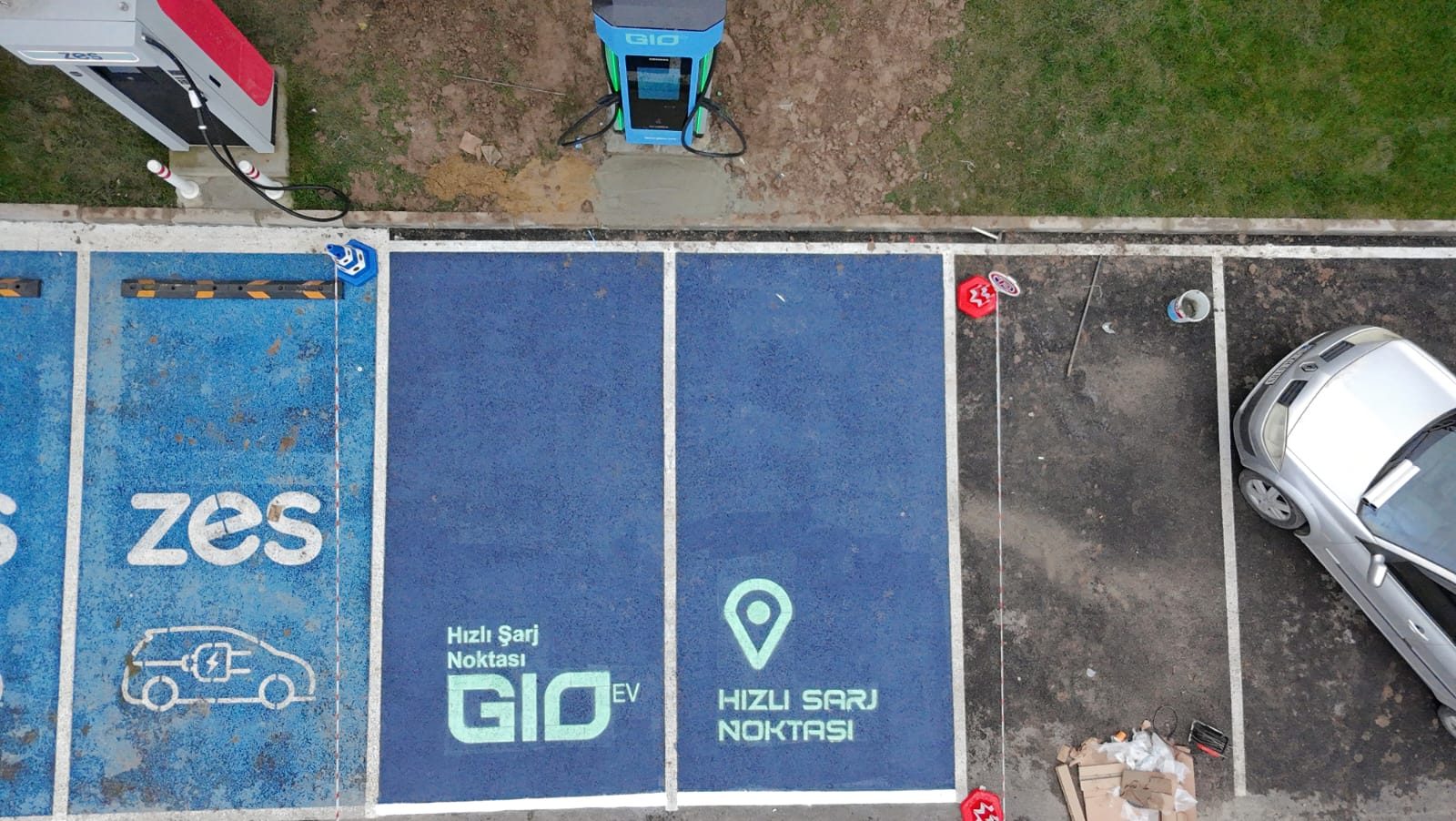
At DBE Energy, we manage the installation, commissioning, operation and maintenance processes of the GIO EV electric vehicle charging network. In 2026, a total of 146 charging stations, 9 DC and 137 AC, with 155 charging sockets were commissioned at 22 locations. The total installed capacity of the new stations reached 4,972 kW.
GIO EV is a charging network that EV drivers access through an app. Growing the network in the field depends on installing and commissioning stations and then keeping them running without interruption. The work completed this year covers a wide range of locations, from shopping malls to fuel stations, and from university campuses to residential complexes and workplaces. As a result, drivers can more easily access both fast charging on the road and regular charging in the places where daily life happens.
A year's work in the field
The 146 stations commissioned throughout 2026 expanded the GIO EV network in terms of both geographic coverage and variety of use. The number of sockets exceeding the number of stations shows that some units serve with more than one socket. For drivers, what matters is often not the number of devices but how many vehicles can charge at a location at the same time; this makes the 155 sockets an important indicator of the network's actual service capacity.
The total installed capacity of 4,972 kW completes the same picture. Installed capacity refers to the sum of the maximum output power for which the stations are designed. The power actually delivered during a charging session varies depending on the charging power the vehicle can accept, the battery's state of charge and ambient conditions. Installed capacity therefore gives an idea of the network's overall ability to supply energy rather than of individual charging times.
A notable aspect of the year's distribution is that DC and AC stations form a complementary structure. The fewer DC units meet the need for fast energy during short stops thanks to their high power, while the far more numerous AC units provide regular charging in living spaces where vehicles stay parked for long periods. This balance allows the same network to respond to different daily and travel scenarios.
High-power DC fast charging
We completed the installation of high-power DC fast charging stations at the GIO EV investment locations of Tunapark, Özdilekpark Nilüfer Mall, Özdilekpark Kocaeli Mall, Sakarya Erenler, İbn Haldun University Rectorate and Sümer Akaryakıt in Edirne Keşan. In Manavgat, we commissioned the location's second DC unit.
The key difference between DC fast charging and AC charging is the form in which energy reaches the vehicle. In AC charging, alternating current from the grid is converted to direct current in the vehicle's onboard charger, and charging power is limited by that charger's capacity. In DC charging, the conversion takes place inside the station and direct current is delivered straight to the battery. Because the limit of the onboard converter is bypassed, charging at much higher power becomes possible.
During charging, the vehicle's battery management system is in constant communication with the station and determines the power to accept based on the battery's temperature and state of charge. As the battery approaches full, power gradually decreases; this is normal behavior intended to protect battery life. High-power DC stations therefore create value especially for drivers who want to gain meaningful range during a short stop. The commissioning of a second unit in Manavgat expanded fast charging capacity at the same location and gave drivers an alternative when the station is busy.
Fast charging shaped by location
The locations where DC stations were installed bring together different ways of using fast charging. At shopping malls, charging time overlaps with the time visitors spend shopping or dining; when drivers return to their vehicles, they have largely received the energy they need to continue their journey. The units at Özdilekpark Nilüfer Mall and Özdilekpark Kocaeli Mall cater to this usage habit.
Fuel stations, meanwhile, are natural rest stops on intercity journeys. The Sümer Akaryakıt location in Edirne Keşan allows drivers on the road to meet their energy needs during a short break. Having a reliable fast charging point on long routes is one of the main factors that ease the range anxiety often voiced about EV use.
The DC station at the İbn Haldun University Rectorate serves academics, students and visitors coming to campus. Users on campus for a short meeting, appointment or event can quickly top up their vehicles during that time. This makes high-power charging accessible within the same network both on the road and at different stops in daily life.
AC charging at residences, campuses and workplaces
In collaboration with Volter Enerji and Katılım Enerji, we commissioned 137 charging units at residential complexes, university campuses and workplaces and connected these stations to the GIO EV network. These locations include KİPTAŞ, Anatolia City, Medeniyet University campuses, Leda Nexa, Concord, Dağ Prime and Yeni Mücevherkent Sitesi.
What these locations have in common is that vehicles stay parked for long periods. At residential complexes vehicles stay parked overnight, at workplaces throughout working hours, and on campuses during class and study hours. During such long stops, the energy a vehicle needs for daily use can be supplied by AC charging without the need for a high-power station. Charging thus stops being a separate stop, as with refueling, and becomes a routine completed while the vehicle is parked.
Offering charging units as part of the parking area at residential complexes allows residents to meet their charging needs right next to their homes. On campuses, students, academics and visitors can use the same infrastructure. At workplaces, the ability for employees to charge their vehicles during working hours stands out as a practical benefit that makes the switch to electric vehicles easier. Because AC charging runs at lower power over longer periods, it also has the advantage of being compatible with buildings' existing electrical infrastructure.
Stations united in one network
Connecting stations installed with different business partners to the GIO EV network means a consistent experience for users. A driver can use both the fast charging unit at a shopping mall and the AC unit at their residential complex as parts of the same network. This consistency reduces the need to deal with different systems at different locations and simplifies EV use.
On the operations side, bringing the stations together in a single network makes it possible to run monitoring and maintenance processes within a common structure. When the operating status of the stations and potential faults can be seen from the same center, prioritizing and planning field interventions becomes easier. As the number of locations grows, this central view becomes one of the key conditions for the network's healthy growth.
24/7 monitoring and planned maintenance
All stations are monitored 24/7 through our central monitoring system. We carry out planned maintenance and service work with our field teams.
Remote monitoring of charging stations relies on continuously overseeing the units' communication links, operating status and potential error logs. When an unexpected situation occurs in a unit, noticing it early matters so that the problem can be addressed before it affects users. Remote assessment also helps ensure that interventions are properly prepared when a site visit is needed.
Planned maintenance means inspecting equipment regularly without waiting for a fault. In the industry, this usually covers the physical condition of cables and connectors, electrical connections, cooling systems and filters, user interfaces and software updates. In high-power DC units, thermal management is especially important for stable operation, while in AC units, wear on sockets and connection points from daily use is among the key inspection items.
The foundation of user trust in a charging network is that the unit is working when the driver arrives at the station. We continue to carry out the operation and maintenance processes of the network, which has grown with the stations commissioned this year, with the same care.