8 MW solar energy investment completed in Kırşehir
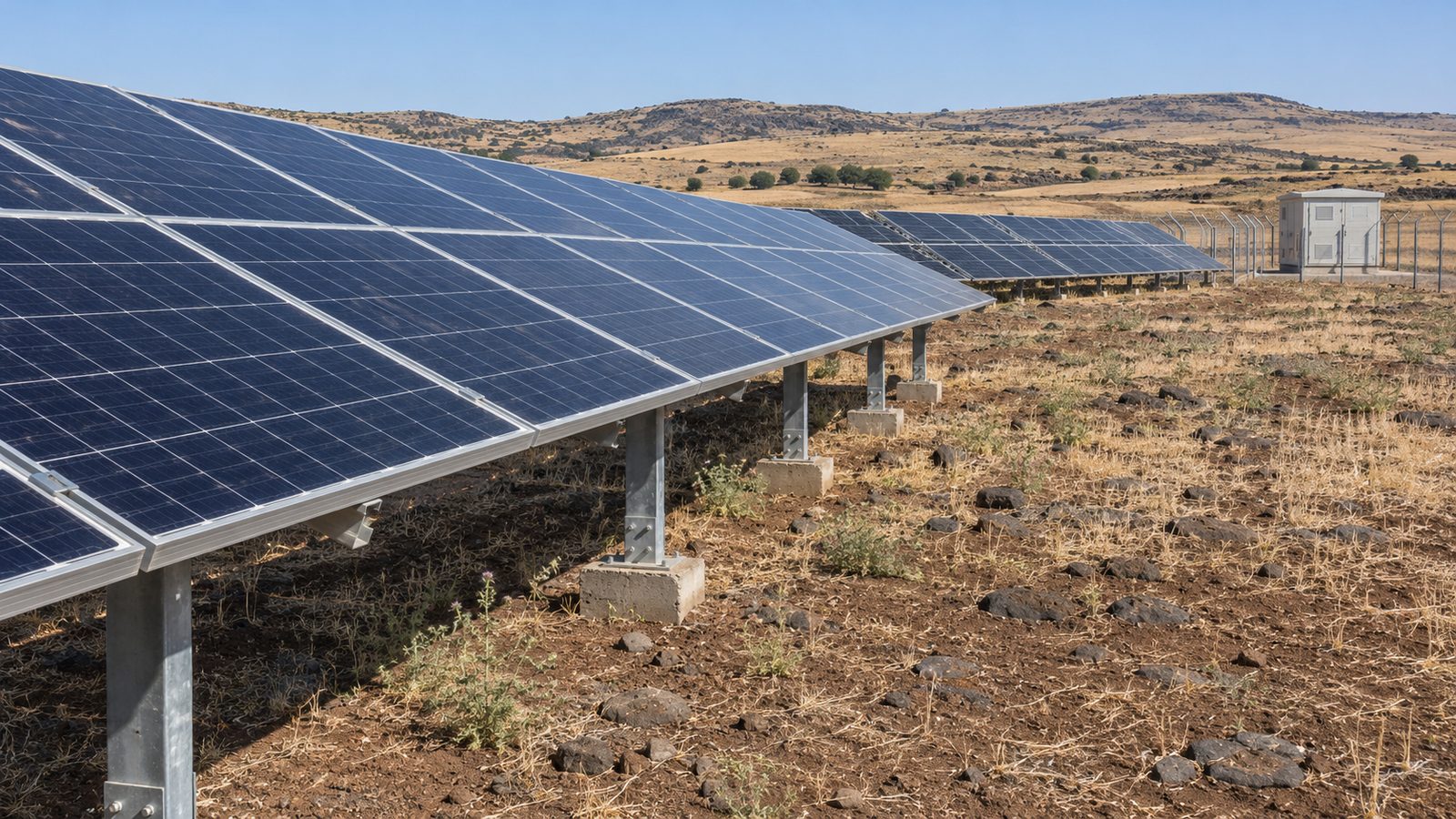
At DBE Energy, we have successfully completed the Güncan Plastik Solar Power Plant project in the Mucur district of Kırşehir.
Now generating power following the completion of its acceptance processes, the plant stands out as a facility that uses bifacial solar panel technology. In this article, we outline the plant's key features, the working principle of bifacial panels, the conditions in the region, and the role of the acceptance process in a solar power project.
8 MW with bifacial panels
With an installed capacity of 8 MW DC and 6 MW AC, the plant began generating energy after its acceptance processes were completed on August 10, 2026. Using bifacial solar panel technology, the facility contributes to the sustainable energy transition through its generation performance.
The plant's capacity is stated separately as DC and AC because the panel side and the grid-connected output side are different quantities. The DC value indicates the total peak power of the panels installed on site, while the AC value indicates the maximum power that can be delivered to the grid through the inverters.
Keeping DC installed capacity above AC installed capacity is a common design approach in solar power projects. Panels operate below their peak power for most of the day, especially in the morning and evening hours when irradiance is weak. A larger panel side helps the inverters stay in their efficient range for longer during the day and makes better use of the installed equipment.
Installed capacity figures alone do not show how much energy a plant will generate. Annual generation depends on the solar irradiance the site receives, panel and inverter efficiency, temperature effects, shading and system losses. Installed capacity therefore describes the plant's capacity, while generation data shows the extent to which that capacity is used.
Bifacial panel technology
Bifacial panels can capture sunlight not only on their front surface but also on their rear surface. While the rear surface of conventional panels is covered with an opaque layer, the rear side of bifacial panels is also light-sensitive. As a result, light reflected from the ground and surrounding surfaces, as well as diffuse light from the sky, also contributes to electricity generation.
The additional yield from the rear surface varies from site to site. The reflectivity of the ground, known as albedo, is one of the main determining factors: light-colored ground and snow cover reflect more light, while dark and vegetated surfaces reflect less. The height of the panels above the ground, the spacing between rows and the shadow the mounting structure casts on the rear surface are also design parameters that affect the gain.
The potential of bifacial panels is therefore realized through the right design. Evaluating site conditions and layout together at the design stage plays an important role in translating the rear-side contribution into generation. The ability to generate more energy with the same installed capacity is the key feature that makes bifacial panels stand out in efficiency-focused projects.
Bifacial panels are mostly manufactured with glass on both the front and rear surfaces. In addition to allowing the rear surface to receive light, this structure also gives the panel mechanical durability. The protection that glass provides against moisture and external factors helps the panels operate reliably for a long time in harsh climate conditions.
Generation in Central Anatolian conditions
Kırşehir is located in the Central Anatolia Region. The region's wide plains and continental climate offer both opportunities and conditions that need attention for solar power plants. While summers with frequent clear skies are an advantage for generation, the cold and snow of the winter months are factors that must be taken into account in design and operation.
This characteristic of the continental climate creates an interesting balance for bifacial panels. Snow can limit generation when it covers the front surface of the panels; however, because snow cover on the ground strongly reflects light as a light-colored surface, it can increase the light reaching the rear surface of the panels. Such local conditions are important for understanding how a plant will generate throughout the year.
In a continental climate, temperature differences between night and day and between seasons are also a factor to consider. Solar panels operate more efficiently at lower temperatures, so cool, clear days can offer favorable conditions for generation. On the other hand, large temperature swings cause materials to expand and contract, which makes the durability of the mounting structure and fasteners important.
Local solar power plants allow a region to generate electricity from its own natural resource. The plant in Mucur also contributes to the energy transition as one of the investments increasing the share of electricity generated from renewable sources.
From design to site
A solar power plant project is a multi-stage process that begins with site selection and ends with the start of generation. This process usually consists of site assessment, engineering and design, equipment procurement, construction and installation, electrical connections, and testing and commissioning. Each stage builds on the output of the previous one; a shortcoming in the design can show up on site, and an error on site can show up during operation.
Site assessment examines the land's structure, slope, soil properties, shading risk and grid connection options. The design stage determines the panel layout, row spacing, inverter configuration and cabling routes. In projects using bifacial panels, parameters such as ground reflectivity and the height of the panels above the ground are also evaluated separately at this stage.
The construction and installation stage is when the design is brought to the site. Erecting the mounting structure, installing the panels, pulling the cables and placing equipment such as inverters, switchboards and transformers are completed at this stage. Carrying out this work in a planned and controlled way, in line with occupational safety rules, is decisive for both the project schedule and the long-term reliability of the facility.
From acceptance to generation
In a solar power plant, the acceptance processes are the critical stage between the completion of installation and the start of generation. At this stage, a range of tests, measurements and inspections verify that the facility has been built in accordance with the project, that the electrical connections have been made correctly, and that the system operates safely.
In the industry, this process generally covers electrical measurements of the panel strings, commissioning tests of the inverters, checks of the protection systems, verification of the monitoring infrastructure and a general inspection of the site. The results are recorded and form a baseline that can be used as a reference throughout the plant's operating period.
With the acceptance processes completed on August 10, 2026, Güncan Plastik SPP moved from the project phase to the operation phase. This transition marks the beginning of a generation period that will last for many years. During this period, regular monitoring and maintenance will be decisive in enabling the facility to maintain the performance envisaged in the design.
The acceptance stage usually also includes the completion of the plant's technical documentation. Implementation drawings, test reports, equipment information and commissioning records are the key resources to consult for maintenance and fault response during operation. Complete documentation makes it easier to manage the plant soundly throughout its life cycle.
Efficiency-focused projects
We continue to develop high-efficiency projects with our engineering experience and implementation capabilities in renewable energy. The plant in Mucur is one of the projects in which this approach has been brought to the field with bifacial panel technology.
Efficiency in a solar power project is not limited to panel selection. Site layout, compatibility between equipment, reduced cabling losses and performance monitoring during operation together determine how much of the installed capacity is converted into energy generation. Engineering experience makes it possible to address these elements holistically from the start of the project.
Efficiency requires considering long-term durability as much as short-term cost when selecting equipment. Choosing components such as panels, inverters and mounting structures suited to the site's climate conditions helps the plant operate with less performance loss over the years. This approach aims to protect the return on investment not only in the first years but throughout the life of the facility.
Implementation capability, meanwhile, is about translating the design accurately to the site. Completing installation to the planned quality standards, carrying out tests in full and moving smoothly through the acceptance processes directly affect the success of a project. This investment completed in Kırşehir is among the experiences that will guide our new projects contributing to the sustainable energy transition.