Comprehensive electrical testing and measurement services
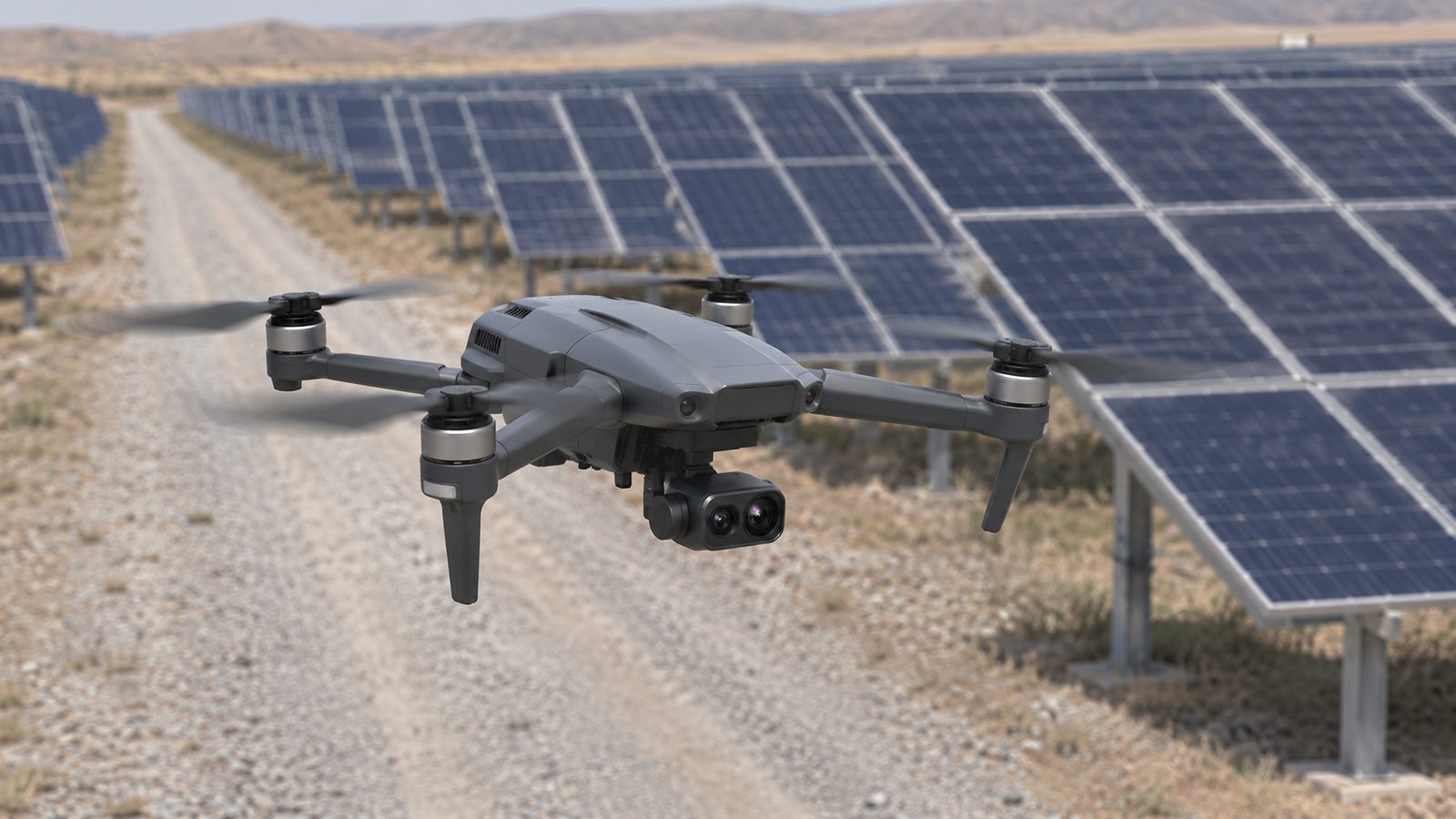
As DBE Energy, we offer comprehensive testing and measurement services to assess the electrical safety and performance of solar power plants.
Although the generation data shown in a plant's monitoring system gives an idea of the facility's overall condition, it does not always reveal the source of problems. Some defects that develop over time in panels, cables and connections reduce generation to an unnoticeable degree while also posing a safety risk. Our work, led by DC insulation tests and I-V curve measurements, aims to reveal this hidden picture with measurable data.
Assessment that starts with measurement
Once installed, solar power plants operate outdoors for many years under changing conditions of temperature, humidity, dust and irradiation. These conditions can cause slow and often silent changes in the electrical properties of equipment. Minor damage to cable insulation, moisture getting into connectors or cell-level defects developing in panels cannot always be detected through visual inspections.
Plant-level generation data may not be enough on its own either. When a plant's total generation falls slightly short of expectations, the cause could be weather conditions, soiling, equipment aging or a fault in a particular string. Telling these possibilities apart is only possible through measurements taken directly on the equipment. This is the starting point of our testing and measurement services: assessing with measured data rather than assumptions.
Tests and measurements serve different purposes at different stages of a plant's life cycle. Measurements taken during commissioning provide reference values that document that the installation was done correctly and serve as the baseline for all later comparisons. Measurements repeated during operation show how far the equipment has drifted from this baseline. Measurements taken after extreme weather events such as storms, hail or floods, or after a major repair, help assess possible damage and the results of interventions.
DC insulation tests
A DC insulation test reveals whether the conductors on the plant's direct current side have adequate insulation to ground. During the test, the insulation resistance between the conductors and ground is measured. In a healthy system, this resistance is expected to be high; a low value indicates that current may be leaking outside its intended path.
Causes of weak insulation include scratches and crushing in cable insulation, rodent damage, moisture getting into connectors or junction boxes, damage to the back sheet of panels and materials that age over time. These problems can become more pronounced in humid conditions such as morning dew or after rain.
The importance of insulation tests shows in terms of both safety and generation. Weak insulation can increase the risk of electric shock for personnel working on site and, in the long term, pave the way for arcing and fire risk. In terms of generation, when inverters detect that the insulation value has dropped below the safe limit, they may not come online or may stop generating as a protective measure. Pinpointing which string has the problem becomes possible by taking measurements string by string.
I-V curve measurements
The I-V curve is a characteristic curve showing how much current a panel or panel string can produce at different voltage values. During measurement, the string's output is swept from open circuit to short circuit and the current-voltage values in this range are recorded. The resulting curve shows the string's open-circuit voltage, short-circuit current and the operating point at which it produces maximum power, all in a single graph.
The value of this measurement comes from the fact that the shape of the curve can be used as a diagnostic tool. In a healthy string, the curve looks close to the expected characteristic shape. Shading or cell-level defects can cause steps in the curve, increased resistance in connections can change its slope, and soiling and aging can lead to an overall drop in current and power values. Faults in bypass diodes can also leave distinctive marks on the curve.
This is also where I-V curve measurements differ from monitoring data. Inverters mostly keep strings at the operating point where maximum power is obtained, and monitoring systems report the values for this point. Because the I-V curve shows the string's entire operating range, it can reveal defects that cannot be detected by looking at a single operating point.
For measurement results to be meaningful, the conditions at the time of measurement must also be recorded. Since irradiance and panel temperature directly affect the curve's values, these parameters are captured along with the measurement, and the results can be corrected to standard test conditions and compared with the values declared by the panel manufacturer. This comparison shows in concrete terms how far the string falls short of its expected performance.
Analyzing current condition
Through technical work led by DC insulation tests and I-V curve measurements, we analyze the current condition of systems and identify potential performance issues. Comparing the data obtained from measurements with each other is as important as assessing them individually. Differences between strings operating under the same conditions highlight the problem areas.
During analysis, the results of different types of measurement are considered together. For example, also examining the insulation values of a string that shows low performance on the I-V curve helps distinguish whether the problem stems from the panels or from the cabling or connections. Where necessary, these findings can be supported by complementary methods such as thermal imaging to pinpoint the location of the problem more clearly.
Identifying potential performance issues at an early stage makes it possible to address problems before they grow. A small loss that starts in a string can, if unnoticed, accumulate over months into a significant loss of generation, while an insulation problem that poses a safety risk can lead to more serious faults over time. Early diagnosis helps make intervention both easier and less costly.
Detailed reporting
We support the measurements carried out by our expert technical teams with detailed reporting processes. The value of measurement data emerges when it is correctly interpreted and presented clearly. Although raw measurement values are meaningful to technical teams, this data needs to be conveyed with its context for investors and facility owners to make decisions.
Such reports generally include the equipment measured, the measurement conditions, the values obtained and a comparison of these values with expected values. The location of detected problems, their possible causes and recommended interventions are also among the main sections of the report. Classifying findings by urgency and level of impact clarifies which issue should be addressed first.
Another function of reporting is that it makes it possible to track how the plant changes over time. Recording measurements taken in different periods in a comparable way makes the aging trend of equipment and the effect of interventions visible. As a result, each measurement becomes more than a snapshot of that moment and turns into part of the plant's technical history.
Supporting investor decisions
By supporting measurements with detailed reporting processes, we help investors make more informed decisions about their facilities. A solar power plant is a long-term investment, and its return depends on how efficiently and safely the facility operates throughout its operating life. That is why having reliable information on the plant's technical condition puts investment decisions on a solid footing.
Test and measurement results can guide a range of decisions. Questions such as which areas the maintenance and repair budget should be directed to, which equipment should be repaired and which replaced, and whether to file a claim with the manufacturer under the equipment warranty can be answered much more clearly with measured data. In processes such as the sale or refinancing of a plant, measurements documenting the facility's technical condition can also become an important part of the assessment.
Electrical safety and performance are inseparable fundamentals of a solar power plant. With our comprehensive testing and measurement services, we assess these fundamentals with measurable data and help plant owners get to know their facilities better and make their plans for the future based on this information.