DBE Holding signed a memorandum of understanding with Siemens
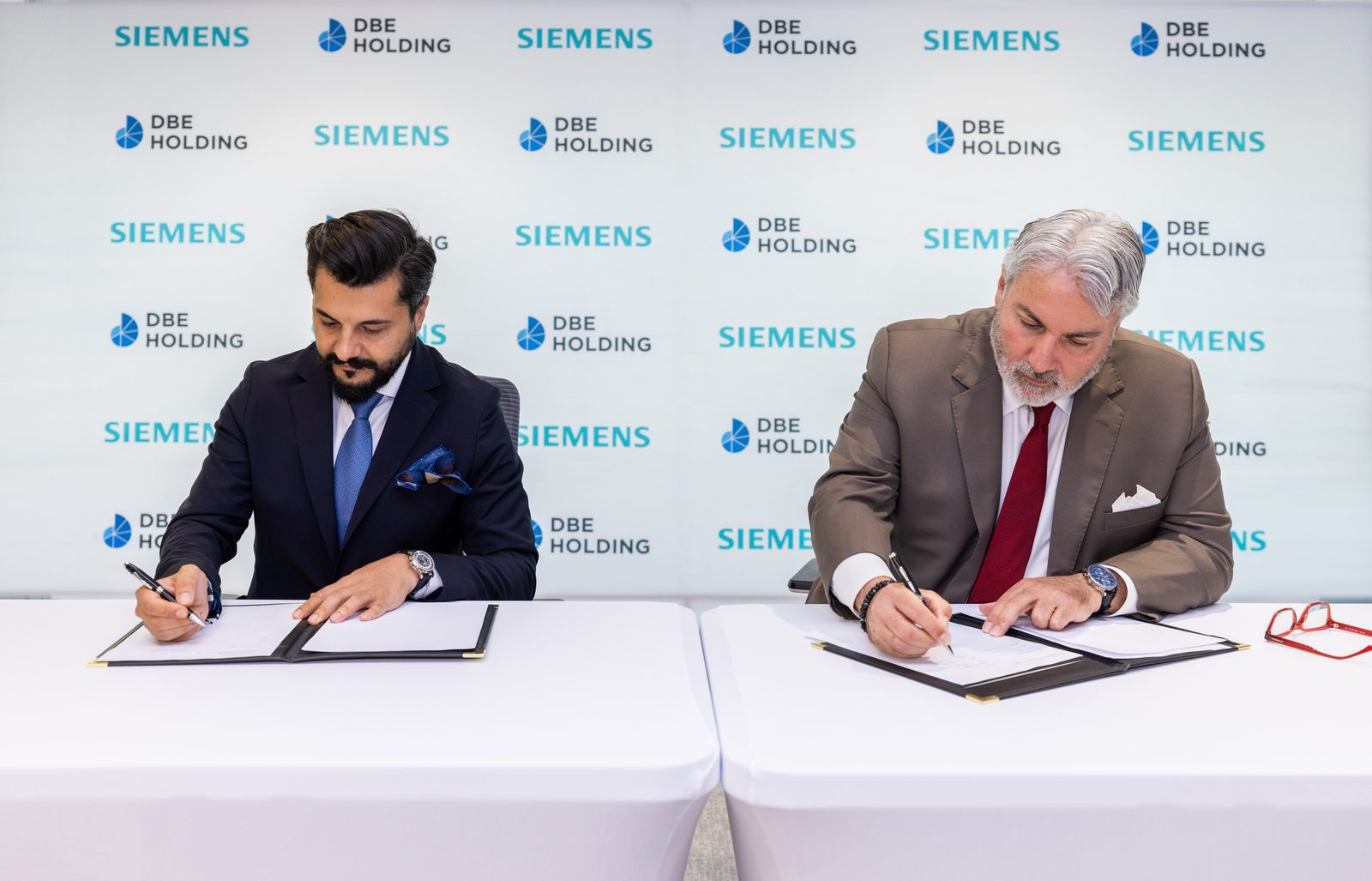
DBE Holding, whose subsidiaries specialize in renewable energy generation and management technologies, signed a memorandum of understanding with Siemens in Dubai, United Arab Emirates. The agreement was signed on behalf of the holding by its subsidiary DBE Global (DBEG). The parties will explore opportunities to work together in engineering, procurement and construction (EPC) on potential sustainability projects in the Middle East.
A memorandum of understanding is a document that sets out the parties' intention to work together and the framework of their cooperation. Concrete projects usually take shape afterwards through separate project-based contracts. The memorandum signed in Dubai is a step that extends the cooperation between DBE Holding's subsidiaries and Siemens in Türkiye to the Middle East.
Scope of the agreement
According to a statement by DBE Holding Chairman of the Board Mehmet Taha Pınar, the memorandum covers DBEG carrying out EPC work as a subcontractor on solar (PV) projects that Siemens may undertake as part of its commercial activities in the Middle East.
The EPC model refers to carrying out the engineering design, equipment and material procurement, and on-site construction and commissioning of an energy project under a single structure. In solar energy projects, this process covers assessing the site, preparing the plant layout and electrical design, procuring panels, inverters and other equipment, and making the plant ready for operation by completing installation, connections and tests.
In the subcontractor model, the main contractor hands over a specific part of the project or the implementation work to a specialized company. In the structure envisaged by the memorandum, DBEG carrying out the EPC work on PV projects Siemens may undertake points to a division of labor that could bring the parties' expertise together on the same project.
Carrying out EPC work as a subcontractor also brings responsibility for completing the project on time and in line with the specified technical requirements. In this model, site organization, procurement management and quality control processes play a decisive role in the project's success.
Energy efficiency and performance projects
The two companies also plan to develop energy efficiency and energy performance projects. These projects are intended to complement the work DBEG is already carrying out in the region.
Energy efficiency projects aim to do the same work with less energy in buildings, industrial facilities and infrastructure. Lighting, air conditioning, motor and pump systems and building automation are among the main focus areas of these projects. In energy performance projects, measuring and verifying the savings achieved comes to the fore; the return on investment is assessed on the basis of the energy savings obtained.
Addressing generation from renewable sources such as solar together with energy efficiency measures contributes to sustainability goals in complementary ways. On one hand, the source of the energy consumed becomes cleaner; on the other, total energy demand is reduced. This approach is particularly important in the Middle East, where the hot climate increases the need for air conditioning.
Measurement and monitoring infrastructure plays a decisive role in these projects. Detailed monitoring of consumption makes it possible to accurately identify savings potential and verify the impact of the measures implemented. For companies specializing in renewable energy generation and management technologies, this field means carrying experience from the generation side over to the consumption side.
Solar energy in the Middle East
With long hours of sunshine and ample land, the Gulf countries offer favorable conditions for large-scale solar energy projects. The region's policies aimed at diversifying energy supply and meeting sustainability goals make solar energy one of the leading themes of this transformation.
In such markets, it is common for international technology companies and engineering firms providing EPC services to work together on large-scale projects. The technology company brings equipment, system solutions and project management experience, while the EPC contractor provides on-site design, installation and commissioning capabilities. The memorandum signed in Dubai also outlines a framework based on this division of labor.
The hot and dusty desert climate requires special measures in the design and operation of solar power plants. The effect of high temperatures on equipment efficiency and the loss of panel performance caused by dust accumulation make engineering solutions and maintenance planning all the more important in these regions.
These conditions require EPC contractors working in the region to develop climate-appropriate solutions in both design and field implementation. Engineering and field experience gained in solar energy projects is decisive in delivering projects with the planned performance under challenging conditions.
Ongoing cooperation in Türkiye
Pınar recalled that DBE Energy, another subsidiary of the holding, had previously worked with Siemens Türkiye in solar energy and GIOEV EV charging units. Under the previous agreement, DBE Energy had begun providing fault detection and troubleshooting, maintenance, commissioning and health check services for Siemens inverters in Türkiye.
Under the new agreement, DBE Energy will provide service support to Siemens inverter users across Türkiye through its branch network. The aim is to reduce generation losses at solar power plants and maximize the facilities' availability.
Inverters are the equipment that converts the direct current generated by solar panels into alternating current that can be fed into the grid, and they are regarded as the heart of the plant. An inverter going offline means the energy generated by the panels connected to it cannot be transferred to the grid. That is why quickly detecting and fixing inverter faults is one of the most effective ways to limit generation losses. Health checks, meanwhile, help spot potential problems in advance by assessing the condition of equipment before a fault occurs.
The availability rate is the ratio of the time a plant or piece of equipment is able to generate to the total time. A nationwide service network contributes directly to raising this rate by shortening the time it takes to reach faulty equipment.
Cooperation in e-mobility
On the e-mobility side, the cooperation between Siemens and FOUR, a subsidiary of the holding, stands out. The GIOEV DC charging units with 300 kW output power covered by this cooperation can fully charge an electric vehicle with a 500 km range in about 25 minutes.
In DC fast charging, alternating current drawn from the grid is converted to direct current inside the station and delivered directly to the vehicle's battery. This bypasses the power limit of the vehicle's on-board charger, making charging at much higher power possible. The power delivered during charging varies according to what the vehicle can accept and the condition of the battery.
High-power charging directly addresses the charging time and range concerns frequently voiced about EV use. Shorter charging times make long trips by electric vehicle more practical while also allowing stations to serve more vehicles in the same amount of time. Addressing the cooperation in solar energy together with e-mobility shows that renewable generation and electric transportation are complementary fields.
In e-mobility infrastructure, technology partnerships also matter for station reliability and service continuity. Combining the equipment manufacturer's technology with on-site installation and operating experience helps high-power charging units run efficiently for a long time.
The goal of future-ready projects
Pınar said that DBE Holding aims to offer high value-added models to all users by developing innovative generation and management technologies. The holding's goal is to become one of the leading global energy companies in next-generation renewable energy.
To this end, the holding continues its work on “future-ready” projects in the Middle East, Europe and North Africa.
With climate conditions that favor abundant sunshine, the Middle East and North Africa are among the leading regions for solar energy investments. Europe, with its policies on energy transition, carbon reduction and energy efficiency, is a market with strong interest in renewable energy and e-mobility solutions. A project approach spanning these regions requires a structure that can adapt to different market dynamics.
The memorandum of understanding signed with Siemens in Dubai stands out as a concrete step toward this goal in the Middle East. Taken together with the ongoing cooperation in inverter services and e-mobility in Türkiye, it is clear that the relationship between DBE Holding's subsidiaries and Siemens spans different fields.