End-to-end technical expertise at power plants
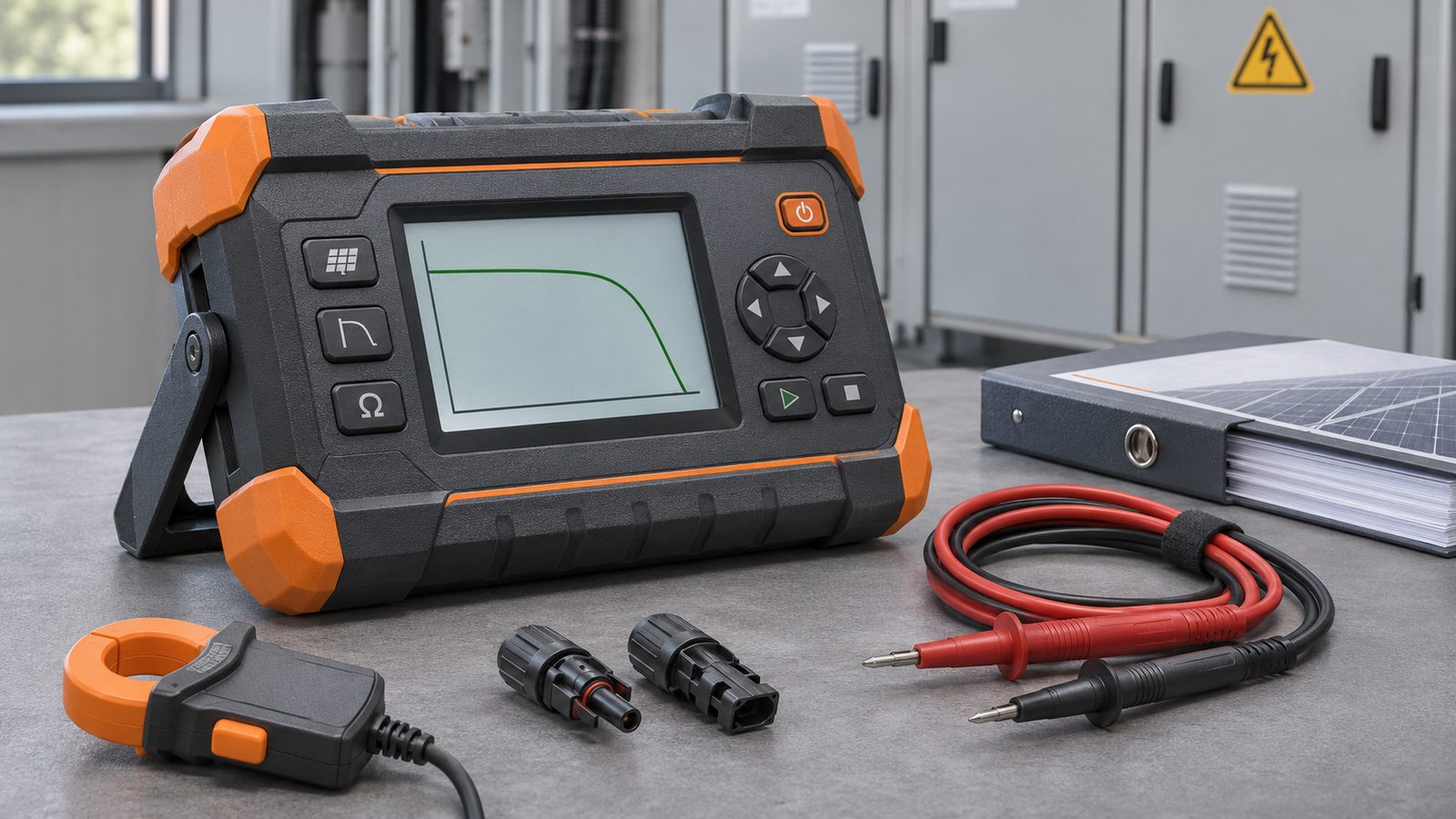
With our engineering and technical service capabilities covering the entire electrical infrastructure of solar power plants, we provide comprehensive operation and maintenance solutions.
At a solar power plant, the energy generated passes through different voltage levels and many interconnected pieces of equipment on its way from the panel to the grid. A problem at any link in this chain can directly affect the plant's generation. This holistic view is why we provide testing, maintenance and fault response services across the plants' entire electrical infrastructure, from medium-voltage systems to DC infrastructure.
The electrical backbone of the plant
The electrical structure of a solar power plant is easier to understand when viewed along the path the energy takes. Solar panels convert light into direct current (DC). Panels connected in series form strings, and the energy from these strings is carried to the inverters via DC cables and combiner boxes. The inverters convert direct current into alternating current, and the energy passes to the low-voltage (LV) side.
At the low-voltage level, the energy reaches the transformers through LV panels, where it is stepped up to medium voltage (MV). MV switchgear cells house the switching and protection equipment that connects the plant to the grid, ensuring energy is transmitted safely and disconnected when necessary. In short, the plant works like a chain running from the panel to the grid connection point, with each stage dependent on the one before it.
This chain structure also shapes the approach to maintenance. A protection fault in an MV cell can stop generation from every panel on site at once, while a loose connector in a string can quietly cause generation losses and, over time, heat-related risks. We work across a broad scope of services, from medium-voltage (MV) systems to transformers, from switchgear and panels to low-voltage (LV) systems and DC infrastructure, because each of these links plays a decisive role in plant performance.
Medium-voltage systems and transformers
The medium-voltage side is where the plant meets the grid and where energy flow is most intense. The equipment in this section performs critical functions for the safety of both the plant and the grid it is connected to. Circuit breakers, disconnectors and protection relays in MV cells quickly isolate the faulty section in the event of a fault, preventing damage from spreading. Whether this equipment is working correctly can only be assured through regular testing and inspection.
Transformers are among the plant's most valuable equipment and among those whose failure can cause the longest outages. In the industry, transformer maintenance generally includes checking connection points and insulation condition, reviewing temperature and protection devices and, for oil-immersed transformers, monitoring oil condition. These checks reduce the risk of the equipment going out of service unexpectedly.
Working at medium voltage requires specialized expertise and strict occupational safety discipline. Fully applying steps such as de-energizing, grounding and lockout is indispensable for the safety of both workers and the facility. That is why maintenance and testing on MV systems is work that must be carried out under the responsibility of experienced engineers and technicians.
Switchgear, panels and low voltage
The low-voltage side is where the energy from the inverters is collected and transferred to the transformer. LV panels manage this energy flow with circuit breakers, fuses, busbars and metering equipment. The auxiliary systems that meet the plant's internal needs are also often connected to this side. The uninterrupted operation of components such as monitoring equipment, security systems and communication infrastructure depends on the health of the LV side.
One of the most common risks in panels and switchgear is connection points that loosen or oxidize over time. Under high current, such points heat up and can cause both energy losses and equipment damage. Site conditions such as temperature swings, dust and humidity can accelerate this process. Periodically checking connections and verifying their tightness is one of the most effective ways to catch these risks before they grow.
Correctly selected and correctly set protective devices are also decisive in low-voltage systems. When a fault occurs, isolating only the faulty section allows the rest of the plant to keep generating. If this coordination breaks down, a minor fault can turn into an outage affecting most of the plant.
DC infrastructure and field cabling
The DC side is the part that spreads over the largest area of the plant site. Panels, strings, DC cables, connectors and combiner boxes are located across the entire site where the plant is installed. This widespread layout means the connection points that need to be checked are also distributed across the site. External factors such as sun, rain, wind, temperature differences and, at times, animals can cause wear on cables and connectors over time.
DC systems have their own specific risks. In alternating current, the current passes through zero at regular intervals, so arcs tend to extinguish; in direct current, there is no such natural extinguishing point. As a result, a damaged cable or an improperly fitted connector can pose serious safety risks on the DC side. Weak insulation both increases the risk of leakage current and can cause inverters to stop generation for safety reasons.
Maintenance of DC infrastructure generally includes visual inspection of cable routes and connectors, examination of fuses and connections in combiner boxes, and verification of insulation and grounding condition through measurements. String-level comparisons help identify sections whose performance stands out from the rest. This way, problem points can be pinpointed in a targeted manner despite the size of the site.
Testing, measurement, inspection and fault response
With our experienced team of engineers and technicians, we manage the testing, measurement, maintenance, inspection and fault response processes that solar power plants need through a holistic approach. Although these processes may seem like separate tasks, they are actually parts of the same cycle. Testing and measurement reveal the current condition of the equipment; maintenance and inspections are shaped accordingly; and fault response aims to restore generation when the unexpected happens.
Testing and measurement work makes invisible problems visible. Values such as insulation resistance, grounding continuity and the correct operation of protective equipment can only be verified through measurement. Scheduled maintenance, meanwhile, helps prevent unexpected downtime by ensuring equipment is checked before it fails and worn components are replaced on time.
In fault response, accurate diagnosis matters as much as speed. A team familiar with the plant's different voltage levels and equipment can identify the source of a fault more quickly. Eliminating not just the symptom but also the cause of a fault prevents the same problem from recurring. Feeding what is learned after an intervention back into maintenance plans completes the cycle.
What a holistic approach offers plant owners
When different parts of a plant are handled by different service providers, responsibility can become unclear, especially when faults arise at the boundaries between sections. For example, a problem that takes inverters out of service may originate from weak insulation on the DC side or from a protective device in an LV panel. A perspective that covers the entire electrical infrastructure makes it easier to get straight to the source of such problems.
For plant owners and investors, a holistic approach means a consistent technical picture of the entire facility. Evaluating findings from different sections together helps set maintenance priorities more accurately and direct resources to where they are needed. This in turn helps protect the plant's generation performance and asset value throughout its long operating life.
We position our engineering and technical service capabilities to cover all electrical components of solar power plants, from medium voltage to DC infrastructure. Our aim is to be a reliable technical partner for plant owners at every stage of operation and maintenance and to help plants run safely, efficiently and without interruption.