We are expanding our operations network across Türkiye
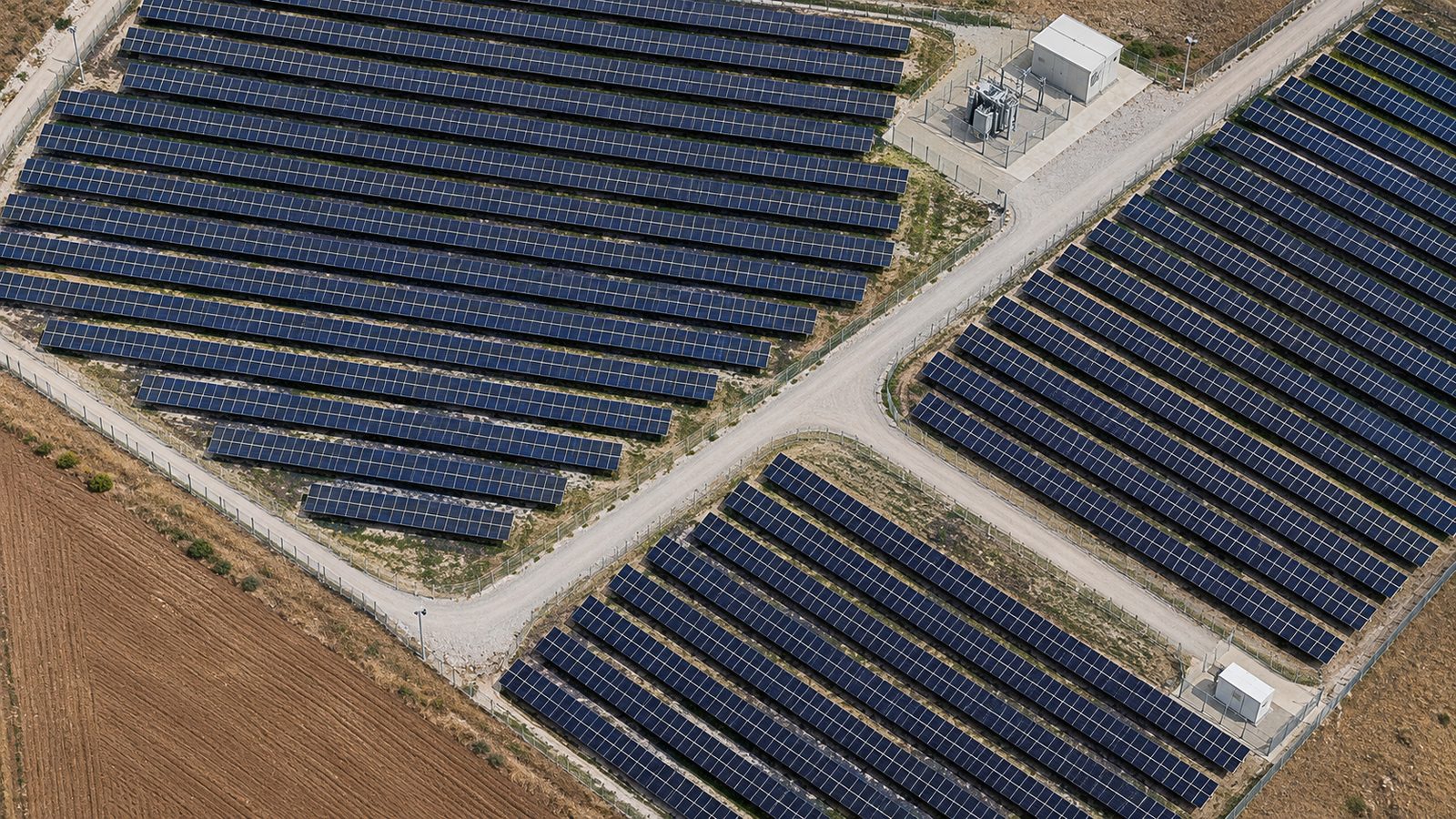
We provide operation and maintenance services for solar power plants across Türkiye through our central operations structure and regional technical teams.
Our existing operations network in the Aegean Region, Burdur, Diyarbakır and Konya is expanding with new organizations established in Ankara and Karaman following new agreements signed in 2026. This structure is built on technical teams located closer to the plants working together with a central operation that monitors the sites from a shared perspective. Our goal is to support the operational continuity of the plants and to manage maintenance and fault processes effectively.
New organizations in Ankara and Karaman
We are expanding our existing operations network in the Aegean Region, Burdur, Diyarbakır and Konya with new organizations established in Ankara and Karaman following new agreements signed in 2026.
Operation and maintenance services for solar power plants require regular access to the plant site. Planned inspections, periodic maintenance and response to unexpected faults are only as effective as the technical teams' ability to reach the site. Establishing a local organization in the regions to be served under the new agreements is therefore a step that directly affects the quality of service.
The new organizations in Ankara and Karaman, together with Konya, extend our operations in Central Anatolia over a wider area. Having locations close to one another in a regional structure generally makes coordination between sites and resource planning easier.
While expanding the geographic reach of our operations network, establishing new organizations also allows the know-how built up in existing regions to be transferred to new sites. Field experience gained in different geographies provides an important foundation for setting up work processes in the new regions.
The scope of operation and maintenance at solar power plants
Operation and maintenance at solar power plants is the full set of activities aimed at ensuring that a plant operates efficiently and safely for many years after commissioning. These activities are generally grouped under headings such as preventive maintenance, corrective maintenance and performance monitoring.
Preventive maintenance involves inspecting equipment at regular intervals before faults occur. In the industry, this includes work such as visual inspection and cleaning of panels, examination of cables and connection points, maintenance of inverters and transformer sections, and checks of protection equipment. Thermographic inspections reveal points on panels and connections that heat up more than normal, helping detect problems invisible to the naked eye at an early stage.
Electrical tests and measurements are also an important part of maintenance. Insulation measurements, string-level current and voltage checks, and current-voltage curve measurements reveal whether panels and strings are delivering the expected performance. Corrective maintenance, in turn, refers to repairing detected faults and restoring the system to full capacity.
Central operations and regional teams
Our operations network is built on our central operations structure and regional technical teams working together. A central operations structure generally makes it possible to monitor plants in different regions from a shared perspective, coordinate maintenance plans and evaluate information from the field as a whole.
Remote monitoring systems at solar power plants continuously report generation data, inverter status and alarm logs. This data makes it possible to spot differences between expected and actual generation and to make an initial remote assessment of the source of potential problems. In most cases, however, fixing the problems identified requires physical intervention on site.
This is exactly where regional teams come in. Bridging the assessment made at the center and the work carried out in the field, these teams can respond to planned maintenance work and faults more quickly thanks to their proximity to the plants. Combining central coordination with local access makes the service both consistent and agile.
This link between central standards and local implementation becomes even more important as the operations network grows. As the geographic spread of plants increases, working with common methods helps maintain service quality across different regions.
On-site response
Thanks to our regional structure, which strengthens our on-site response capability, we support the operational continuity of power plants and ensure that maintenance and fault processes are managed effectively.
At a solar power plant, every piece of equipment taken out of service by a fault means a direct loss of generation during sunlight hours. An inverter stopping, a connection problem in a string or a protection system tripping can take part or all of a plant offline. The time between detecting a fault and fixing it is one of the most important factors determining the size of the loss.
Having technical teams close to the plant directly helps shorten this time. The teams' familiarity with the region, site access conditions and the plants' layout also helps them arrive properly prepared. Being able to anticipate spare parts and equipment needs in advance makes every site visit more productive.
Safety is also a decisive factor in fault response. At solar power plants, panels continuously generate voltage in daylight, and work on medium-voltage sections requires qualified personnel and appropriate safety procedures. Teams that know the site and are accustomed to these conditions can carry out the intervention both quickly and safely.
Different climates, different maintenance needs
The regions covered by our operations network have widely differing climate and site conditions. Hot summers are prominent in the Aegean Region and Diyarbakır, while Central Anatolia, home to Konya, Ankara and Karaman, sees the cold winters and marked temperature swings of a continental climate. In Burdur, in the inland part of the Mediterranean Region, Mediterranean and continental climate features are found together.
These differences also directly affect maintenance needs. Dust and soiling can reduce generation by lowering the light transmittance of panel surfaces, so cleaning needs vary from region to region. High temperatures place thermal stress on inverters and electrical equipment, while cold and snowy periods can affect site access and the condition of panel surfaces. Temperature differences between night and day cause materials to expand and contract, which requires regular inspection of connection points.
Our regional structure makes it easier for these conditions to be monitored by teams who know the sites closely. Tailoring the maintenance approach to regional conditions helps the plants operate with consistent performance throughout the year.
Measuring performance
The basic way to tell whether a solar power plant is operating properly is to compare actual generation with expected generation. Expected generation is calculated based on the plant's installed capacity, irradiance during the relevant period, temperature and equipment specifications. The performance ratio, widely used in the industry, is a metric for evaluating a plant's efficiency while accounting for differences in irradiance conditions.
Drops in the performance ratio often point to a problem that has not yet been noticed on site. Factors such as soiling on panel surfaces, a lost connection in a string, reduced inverter efficiency or shading can be uncovered through regular analysis of generation data. Combining these analyses with fieldwork makes it possible to reach the source of the problem faster.
Availability refers to the ratio of the time a plant or piece of equipment is ready to generate to the total time. Because this metric directly reflects how often faults occur and how quickly they are fixed, it is one of the key indicators for evaluating the quality of operation and maintenance services.
Operational continuity for plant owners
Solar power plants are investments made with long-term generation expectations. Whether these investments deliver the expected return depends not only on the plant being built correctly but also on its operating with high availability throughout its operating life. Regular maintenance preserves equipment performance and prevents minor problems from turning into major faults.
For plant owners and investors, the value of operation and maintenance services lies in limiting generation losses and being able to monitor the plant's condition transparently. Regular reporting of the work carried out and of plant performance provides a reliable picture of the investment's health. Regular, clear information on the plant's technical condition is also an important basis for investors and financial institutions in evaluating the investment.
By carrying our experience in the Aegean Region, Burdur, Diyarbakır and Konya to our new organizations in Ankara and Karaman, we continue to strengthen our operations network across Türkiye.