Joining forces in solar energy
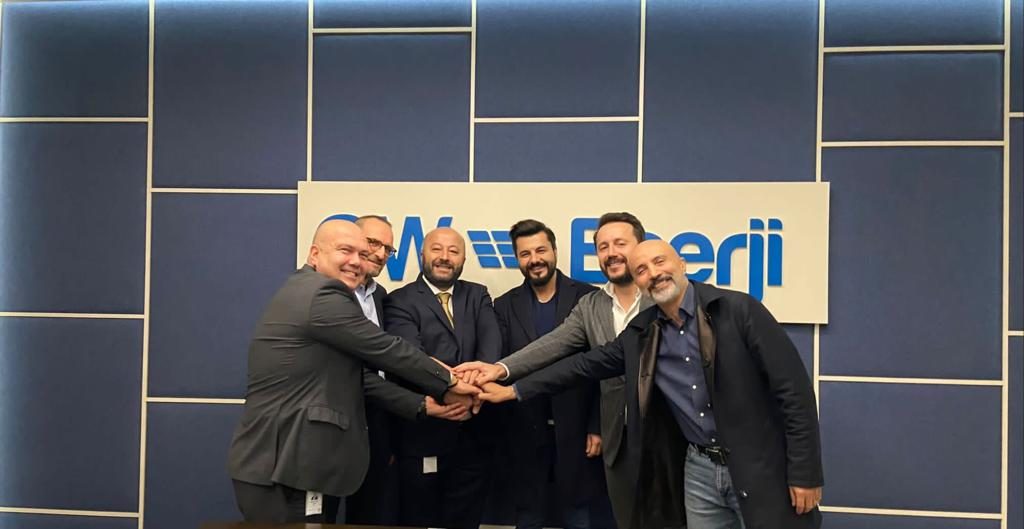
DBE Holding subsidiary DBE Energy signed a 250 MWp cooperation agreement with CW Enerji, the largest solar panel manufacturer in Europe and Türkiye with an annual solar panel production capacity of 1.3 GW. DBE Energy will use high-efficiency panels produced by CW Enerji in its solar power plant investments starting in 2023.
In addition to clarifying the panel side of DBE Energy's planned solar energy investments, the agreement also stands out as an example of domestic manufacturing meeting renewable energy investment.
Scope of the agreement
The 250 MWp figure, which expresses the size of the agreement, conveys the scale of the cooperation in terms of panel peak power. MWp, or megawatt-peak, refers to the maximum power panels can reach under standard test conditions and is the basic unit used to define the DC installed capacity of solar power plants.
CW Enerji's annual production capacity of 1.3 GW shows the company's ability to supply large-scale projects. In solar power plant investments, panels are one of the most decisive components of investment cost and generation performance. Establishing a panel supply partnership before investments begin therefore brings predictability to project planning.
High-efficiency panels are panels that can generate more electricity from the same surface area. Higher panel efficiency can reduce the number of panels needed to reach a given installed capacity, and with it the need for land, mounting structures and cabling. This has a positive effect on the plant's total cost and long-term generation performance.
In panel supply, quality assurance matters as much as production capacity. Tests performed during production, certification processes and manufacturer warranties form the basis of expectations for the plant's long-term performance. For investors, panel selection is therefore a decision evaluated not only on price but also on reliability and continuity.
Signing ceremony
The signing ceremony between CW Enerji and DBE Energy, a subsidiary of DBE Holding, which operates with 11 brands in 7 countries on 3 continents, was attended by DBE Holding Chairman of the Board Mehmet Taha Pınar, CW Enerji Chairman of the Board Tarık Sarvan, CW Enerji CFO Melik Yetim, DBE Holding CEO Efrahim Türkmen, DBE Energy CEO Rıfat Göksu and FOUR Charger CEO Selçuk Aslan.
The attendance of the parties' senior executives reflects the strategic importance of the agreement for both organizations. The presence of CW Enerji's chairman and finance executive, and on the DBE side of DBE Energy's CEO alongside the holding's management, indicates that the cooperation was addressed in its commercial and financial dimensions and was also embraced at the level of the company that will carry out the investments.
DBE Holding's multi-brand structure spanning different continents and countries is also a reminder that energy investments are addressed within the group's broad business portfolio. Solar power plant investments are a concrete indicator of the importance this portfolio places on renewable energy.
Bringing the panel manufacturer and the plant investor to the same table also makes the link between the manufacturing and investment stages of the solar energy value chain tangible. Such partnerships place the relationship between equipment manufacturing and energy generation on a more predictable and planned footing.
Helping reduce the current account deficit
Mehmet Taha Pınar said that, with the agreement, they would help reduce the energy-related current account deficit through the solar power plant investments to be made in 2023. The investments, to be completed with a total budget of $220 million, will generate approximately 400 million kWh of electricity, prevent 312,000 tons of carbon emissions and meet the electricity needs of a settlement with a population of about 110,000.
The current account balance shows the balance of a country's transactions with the rest of the world, mainly trade in goods and services; a current account deficit means payments exceed revenues in this balance. Because Türkiye meets a significant part of its energy needs through imports, energy is one of the decisive items in this balance. Electricity generated from domestic and renewable sources contributes to this balance by reducing the need for imported fuel.
Sourcing panels from a domestic manufacturer is meaningful from the same perspective. Domestic production of the core equipment used in the investment can be seen as a factor reducing the investment's dependence on imports. In this way, both the energy generated and the equipment that generates it contribute to the domestic value chain.
The impact of renewable energy investments on the current account balance lasts throughout the plants' long operating life. Once commissioned, a solar power plant generates electricity for years without requiring fuel imports. This is one of the features that also make solar energy valuable for security of energy supply.
What the numbers tell us
The figures for the investments reveal the scale of the projects from different angles. The kilowatt-hour is the basic unit for measuring electricity consumption, and the consumption values shown on bills are also expressed in this unit. Generation of approximately 400 million kWh shows the amount of electricity the investments will bring to the grid.
The 312,000 tons of carbon emissions to be prevented make the environmental contribution of solar energy tangible. Solar panels do not burn fuel or create direct emissions when generating electricity; therefore, when the electricity they generate replaces electricity that would otherwise be generated from fossil fuels, carbon emissions decrease. This approach is widely used to express the contribution of energy investments to the fight against climate change.
Meeting the electricity needs of a settlement with a population of about 110,000 also makes it easier to understand what the generation means in everyday life. Such comparisons make quantities expressed in technical units like megawatts and kilowatt-hours more understandable to a broad audience.
These figures also provide a framework for assessing the social benefit of the investments. While clean energy generation holds an important place on the public agenda in terms of air quality and climate goals, concrete indicators make it easier to track the investments' contribution to these goals.
From investment to generation
In addition to panel supply, solar power plant investments consist of successive stages such as site selection, engineering, construction, grid connection and commissioning. Establishing a panel supply partnership at the start of this process stands out as a step that makes it easier to plan the subsequent stages.
In large-scale investments, procuring equipment on time and in the required quality is decisive for keeping to the project schedule. Delays in supply can also affect construction and commissioning. A partnership with a manufacturer with high production capacity can therefore help investments proceed as planned.
Once the investments are completed, the plants enter an operating period that will last many years. During this period, panel performance remains one of the key determinants of whether the plant reaches its generation targets. In this respect, choosing high-efficiency panels is a decision that concerns not only the installation phase but the plant's entire life cycle.
Operation and maintenance work also plays a role in preserving the efficiency expected from the panels. Keeping panel surfaces clean, detecting potential damage early and regularly monitoring generation data help realize the potential of high-efficiency panels throughout the plant's life.
For a better world
Pınar stated that they are driven by the vision of becoming a global company that develops high value-added models with innovative generation and management technologies in next-generation renewable energy, adding, “As DBE Holding, we are working for a better world with each of our brands.”
This vision reflects an approach to energy that focuses not only on generation capacity but also on technology and management models. In renewable energy, added value is created across a wide area, from the efficient design of plants to the smart management of the energy generated and the quality of services offered to users.
The emphasis on working for a better world with each of the group's brands draws attention to the environmental and social outcomes of energy investments. Solar power plants are among the investments that align directly with this goal in areas such as clean electricity generation, reducing carbon emissions and using domestic resources.
In this respect, the agreement signed with CW Enerji is a concrete expression of the vision in solar energy. The plants to be built with high-efficiency domestic panels will contribute to both energy supply and environmental goals.