Major partnership in the solar energy sector
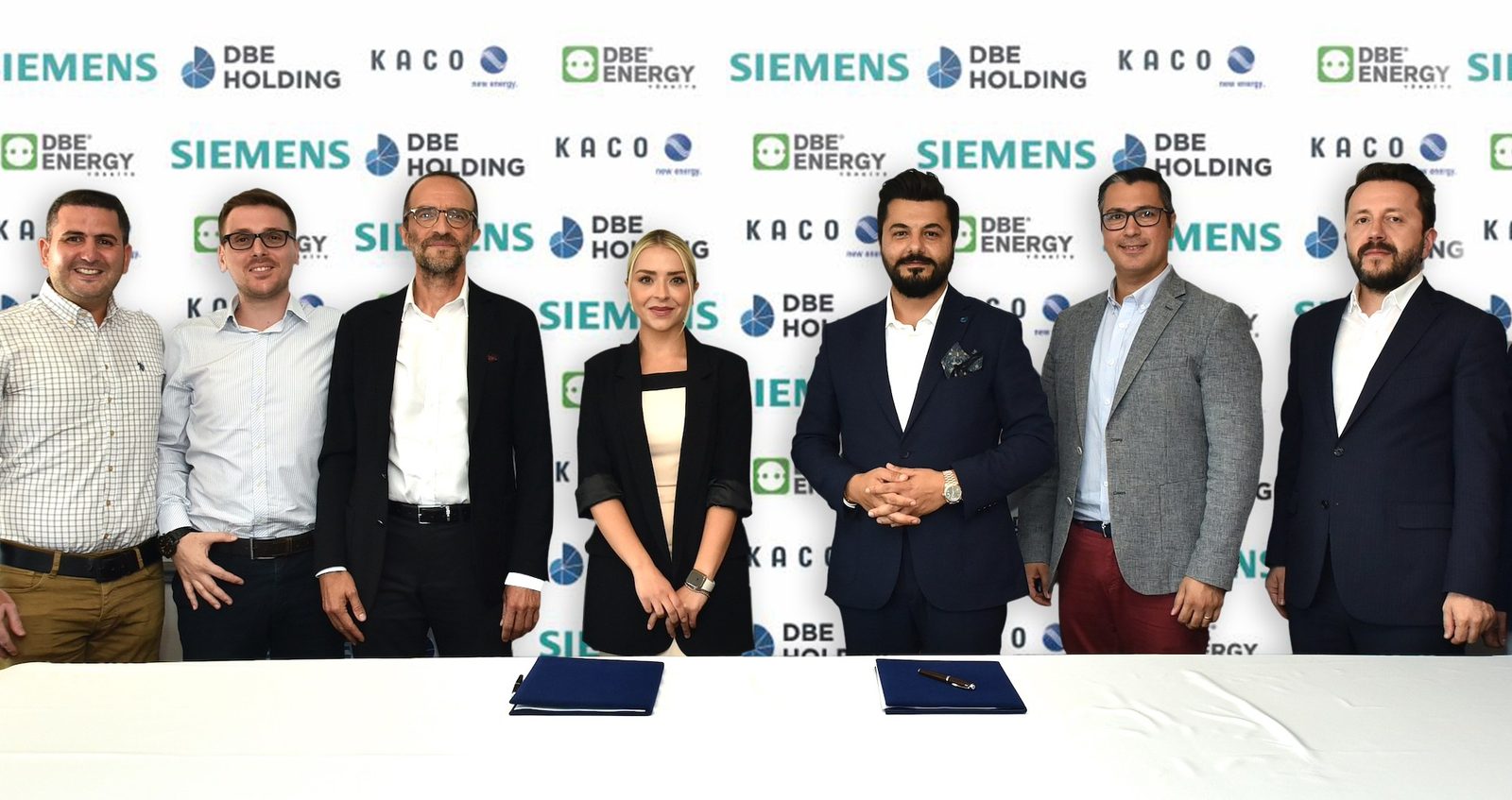
DBE Holding subsidiary DBE Energy signed a cooperation agreement with Siemens Türkiye for the solar energy sector. Under the agreement, DBE Energy became the service provider for the inverters Siemens has commissioned in Türkiye.
In solar power plants, inverters are among the critical equipment that delivers the energy generated by the panels to the grid. Inverter maintenance, rapid response to faults and proper commissioning of new facilities therefore directly determine generation continuity for plant investors. The cooperation provides for DBE Energy to meet these needs at plants using Siemens inverters.
Scope of the agreement
Under the cooperation, DBE Energy will provide fault detection, fault response, maintenance, commissioning and health check services for Siemens inverters. In this way, the inverter maintenance needs of Siemens Türkiye's solar power plant projects will be met by DBE Energy's teams.
Fault detection generally involves identifying the source of the problem by evaluating the inverter's error logs, monitoring data and field measurements. Accurate diagnosis is a prerequisite for targeted intervention and for avoiding unnecessary part replacements. Fault response means resolving the identified problem and bringing the inverter back into generation.
Commissioning is a process that includes setting the parameters of newly installed inverters, checking their compliance with grid connection requirements and performing initial start-up tests. A health check is a service that examines the overall condition of operating inverters to detect potential problems before they turn into faults.
Maintenance can generally include periodic inspection of inverters in line with the manufacturer's recommendations, cleaning or replacing components such as filters and fans, and reviewing connections and software versions. Regular maintenance is one of the key tools for keeping inverters running stably over the long term and reducing fault frequency.
The inverter's role in the plant
Photovoltaic panels generate direct current, while the power grid runs on alternating current. In addition to performing this conversion, inverters carry out maximum power point tracking to draw the highest power from the panels, monitor grid conditions and, when necessary, disconnect the plant from the grid for protection. In this respect, inverters are at the center of a solar power plant in terms of both generation and safety.
An inverter going offline means the energy generated by the panels connected to it cannot be transferred to the grid. Depending on the plant design, this can cause generation losses in part of the facility or, in setups using central inverters, across a much larger area. How long it takes to fix the fault directly determines the amount of generation lost.
Inverters used in power plants are generally divided into central and string types. Central inverters gather a large group of panels into a single device, while string inverters serve smaller panel groups. Each setup has its own requirements for maintenance and fault management, and service must be carried out with these differences in mind.
Inverters also serve as the plant's data source. By recording values such as generation, voltage, current and temperature, these devices make it possible to track the plant's real-time status through remote monitoring systems and detect faults early.
Preventing generation losses
DBE Holding Chairman of the Board Mehmet Taha Pınar said that, with their extensive branch network across Türkiye, they would support the service processes for inverters belonging to investors who are Siemens customers. Pınar stated that they would help improve the efficiency of a 1.8 GW solar power plant portfolio and speed up the commissioning of new facilities, aiming to prevent generation losses and maximize the facilities' availability.
Availability is the ratio of the time a plant or piece of equipment is ready to generate to the total time. High availability means every moment of sunshine can be turned into generation. Quickly detecting and fixing faults and reducing fault frequency through preventive maintenance are the main ways to keep this ratio high.
An extensive branch network is decisive in shortening site access times. At plants spread across different provinces, how quickly service teams can reach faulty equipment directly affects how long generation is lost. Faster commissioning of new facilities, in turn, helps plants start generating sooner.
Generation losses do not stem only from complete failures. Partial performance declines, incorrect parameters or inverters that limit power due to overheating can also reduce generation unnoticed. Health checks play an important role in uncovering such hidden losses.
Assessment from Siemens Türkiye
Alper Çelebi, Country Business Unit Head of Electrification and Automation at Siemens Türkiye, said they had contributed to energizing approximately 1.5 GW of the 8 GW of solar power plant capacity installed in Türkiye. Noting that approximately 2.5 million tons of carbon dioxide emissions had been avoided at plants using their inverters and that an average of 2 million trees were protected each year, Çelebi stated that the cooperation with DBE Energy would contribute to sustainable energy generation.
The figures Çelebi shared show that Siemens inverters hold a significant share of Türkiye's solar energy capacity. Meeting the service needs of an installed base of this scale with a local partner means continuity and accessibility of service for investors.
Avoided carbon dioxide emissions are one of the most tangible indicators of the environmental benefit of solar energy replacing fossil fuel generation. Sustaining this benefit depends on plants operating at high efficiency for many years, which is why inverter service and maintenance are directly linked to sustainable energy generation.
The growth of installed solar capacity in Türkiye also increases the maintenance and service needs of existing plants. Every completed plant becomes part of the service ecosystem as an asset that requires regular maintenance, fault response and performance monitoring throughout its operating life.
What it means for investors
For owners of plants using Siemens inverters, the agreement means their service needs will be met by a service provider with an extensive branch network across Türkiye. Fault response, health checks and commissioning support for new facilities cover the core needs a plant may face throughout its operating life.
Inverters are among the equipment in solar power plants that require more frequent maintenance and intervention than panels. Elements such as electronic components, cooling systems and software updates need regular attention. A formal partnership between the equipment manufacturer and the service provider gives investors confidence that these needs will be met.
In solar energy investments, a plant's economic success depends on how uninterrupted its generation is over the long operating period after installation. That is why the accessibility and speed of service are among the factors investors consider when choosing equipment.
Commissioning support is particularly important for new facilities. Correctly completing the settings and tests during commissioning lays the foundation for the plant to perform as expected from day one, while delays at this stage can postpone the start of generation.
Ongoing cooperation with the Siemens group
The cooperation between DBE and the Siemens group is not limited to this. In April 2022, DBE Energy entered into an inverter partnership with Siemens subsidiary KACO New Energy for 200 MW of solar power plant investments; in the same month, DBE Holding subsidiary FOUR also purchased 300 kW fast charging units from Siemens.
The inverter partnership with KACO New Energy targets solar power plant investments, while the 300 kW fast charging units purchased by FOUR are aimed at EV charging infrastructure. The service agreement signed with Siemens Türkiye extends this relationship to the operation and maintenance side of solar power plants.
These partnerships, ranging from equipment supply to service, show that the relationship between the DBE group and the Siemens group spans different energy fields. Solar power plants and EV charging infrastructure, as complementary fields, are at the center of this relationship.