We installed a new fast charging station in Erenler, Sakarya
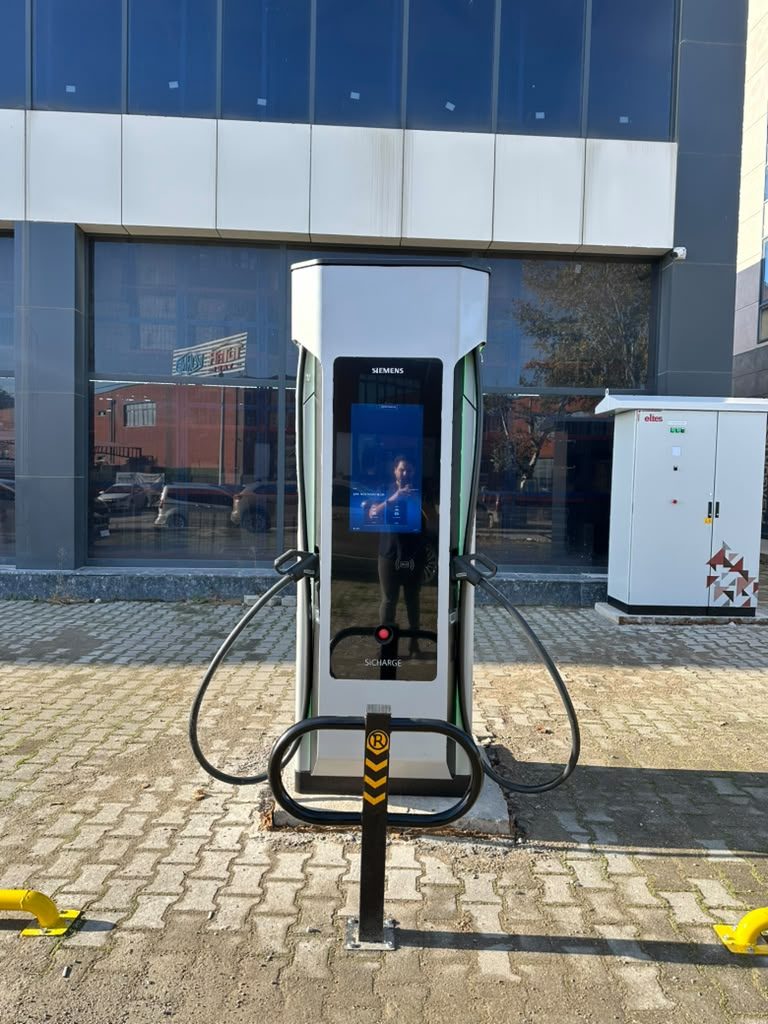
At DBE Energy, we have installed a Siemens SICHARGE D DC fast charging station with 300 kW output power in Sakarya Erenler for the GIO EV charging network. Commissioning work is underway at the station, which has been connected to our central monitoring system; it will soon be available to GIO EV users.
Sakarya is a province located on the main transportation corridor between İstanbul and Ankara. This location makes fast charging infrastructure valuable not only for drivers living within the province but also for EV users traveling between cities. Once in service, the new station in Erenler will give the GIO EV charging network a high-power charging point in Sakarya.
Station features
The station has 2 CCS2 cabled charging points. CCS2 is the connector standard used for DC fast charging by the vast majority of electric cars sold in Türkiye and Europe. Choosing a common socket type allows vehicles from different brands to charge at the same station without an adapter. Because the cables are fixed to the station, drivers also do not need to carry separate equipment.
The 300 kW output power of the Siemens SICHARGE D station represents the upper limit the station can deliver. How much power a vehicle actually draws during charging depends on the maximum DC charging power the vehicle supports, its battery architecture, and the battery's current state of charge and temperature. The gradual decrease in charging power as the battery approaches full is normal behavior intended to protect the battery in electric vehicles.
A station with high output power allows new-generation vehicles that can accept higher power to make use of this capacity. Vehicles that support lower charging power continue to charge at the same station within their own limits. This flexibility makes the station a shared service point for vehicles in different segments.
Battery temperature can significantly affect charging power, especially in cold weather. A battery not accepting high power until it reaches a suitable temperature is part of a vehicle's protection mechanisms. Some vehicles offer features that preheat the battery on the way to a fast charging station, helping shorten charging time.
Fast charging on intercity journeys
For drivers making long trips by electric vehicle, one of the most decisive factors is the location and reliability of fast charging points along the route. Because a charging stop on an intercity journey can take longer than refueling, drivers often plan their routes around fast charging stations. Charging network apps are among the main tools drivers rely on for this planning. High-power stations shorten these stops, making long journeys more predictable.
Sakarya's location between İstanbul and Ankara makes fast charging points in the region important not only for local users but also for drivers traveling along this axis. Positioning the stations in a charging network to complement one another gives drivers confidence that they will have access to charging throughout their journey.
This confidence also influences the decision of drivers considering a switch to an electric vehicle. Range anxiety, the worry that a vehicle's charge will not last on the road, decreases as the number of accessible and working fast charging points grows. Every new high-power station becomes part of the infrastructure that addresses this concern.
The station's 2 charging points allow more than one vehicle to be served at the same time. In this case, total power can be shared between the charging points depending on the station's configuration. Having more than one charging point during periods of heavy travel reduces the likelihood of drivers having to wait at the station.
Daily use in Sakarya
Erenler is one of Sakarya's central districts. For drivers who use their vehicles in the city every day and do not have charging access at home, a nearby fast charging point makes planning daily transportation easier. Being able to charge a significant part of the battery during a short break, depending on the vehicle model, makes fast charging a practical option for users with busy schedules.
The picture is similar for commercial use. Since electric vehicles used in taxi, fleet or delivery services cover longer distances during the day, keeping charging times short is decisive for operational efficiency. High-power DC stations help such users keep their vehicles out of service for less time.
In urban use, fast charging plays a role that complements, rather than replaces, slow charging at home or at work. For drivers who need to make an unexpected trip during the day or cannot charge their vehicle overnight, a high-power station serves as a safeguard that provides sufficient range in a short time.
The commissioning process
The station was connected to our central monitoring system on July 9, 2026. With commissioning work underway, the station will soon be available to GIO EV users. Connection to the central monitoring system marks the start of the stage at which the station's on-site status can be tracked remotely. Thanks to this connection, the station can be monitored from the center even while commissioning work continues.
Commissioning is the verification stage a fully installed station goes through before it is opened to users. In general industry practice, this stage covers checking the grid connection and protection equipment, configuring the station software, testing communication with the central system and verifying that the charging points work correctly. Completing these steps in full is the prerequisite for the station to operate safely and without interruption from its first day in service.
Electrical safety is especially important for a DC station operating at high power. Verifying elements such as grounding, insulation and overcurrent protection before opening to service is one of the industry's fundamental requirements for both user and vehicle safety. Carrying out the commissioning stage with care aims to ensure that the station serves to the same safety standard from its very first user.
Operation and maintenance
The station's operation, maintenance and 24/7 remote monitoring processes will be carried out by DBE Energy teams. While GIO EV serves EV drivers as a charging app and charging network, the installation, commissioning, operation and maintenance of the stations are handled behind the scenes by DBE Energy. While drivers use the station through GIO EV, its technical continuity will be the responsibility of DBE Energy teams.
Planned field maintenance is necessary for high-power charging equipment to operate efficiently over a long period. Regularly checking the physical condition of sockets and cables, cooling systems, filters and electrical connections is among the common industry practices for DC fast charging stations. Noticing wear on frequently used cables and sockets early directly affects both safety and the user experience.
Remote monitoring complements field maintenance. When the station's online status, charging sessions and alerts from the device are tracked centrally, a potential problem can often be detected before the user notices it. Monitoring data also guides field teams in setting their intervention and maintenance priorities.
Getting ready for launch
Once commissioning work is complete, the station will be made available to EV drivers through the GIO EV app. After it opens to service, drivers living in Sakarya or passing through the province will be able to access a high-power DC charging point via GIO EV.
For drivers, a station's opening becomes tangible when it becomes visible and usable in the app. With the completion of commissioning work, the station in Erenler will join the charging points that drivers in Sakarya can choose in the GIO EV app.
The growth of a charging network is meaningful not only through the installation of new stations but through every installed station being operated to the same standard. The station in Erenler is being prepared for service with this approach, as the Sakarya step of the installation, commissioning and operation work we carry out for the GIO EV charging network.