We commissioned the second DC fast charging station in Manavgat
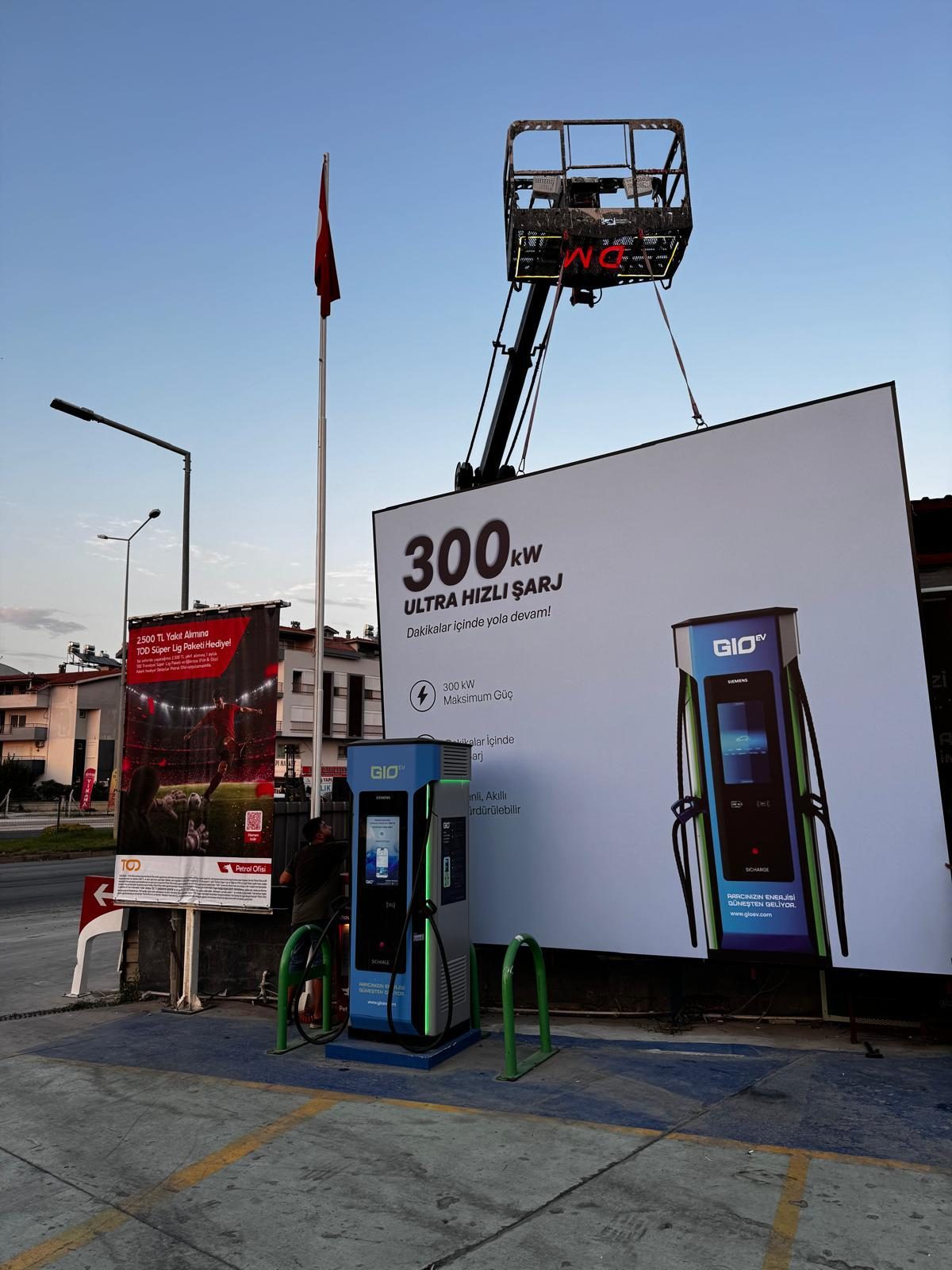
At DBE Energy, we have completed the installation and commissioning of a Siemens SICHARGE D DC fast charging station with 300 kW output power at the Çıkla Petrol station in Manavgat, Antalya, for the GIO EV charging network.
The new unit was installed next to the first DC station, which has served the location since 2023. This expands fast charging options for EV drivers stopping at the fuel station in Manavgat, a destination known for its tourism traffic. The process, from installation and connection to the monitoring system to the first charging session and planned service work spread across the year, also shows how a fast charging location is brought to life and sustained in the field.
Capacity doubled
With the new unit installed next to the first DC unit that has served the location since 2023, fast charging capacity has doubled. The station has 2 CCS2 tethered charging points.
At a single-unit location, if the station is busy or out of service due to maintenance work, fast charging at that point is temporarily unavailable. With the second unit in service, the number of vehicles the location can serve has increased and service continuity has been strengthened. When work needs to be done on one unit, the other can keep serving users.
For drivers, this means a lower chance of waiting in line, especially during peak periods. A driver who is more likely to find a free charging point on arrival can plan their stop and journey more predictably. And this predictability is exactly one of the most important factors shaping the user experience in fast charging.
Electrical infrastructure for high power
High-power DC charging units draw a significant amount of power from the location's electrical infrastructure. This is why installing a fast charging station is not just a matter of placing the unit on site; the location's grid connection, distribution panels, cabling and protection equipment need to be planned to carry this power safely. When a second high-power unit is added to the same location, this planning is handled so that it does not affect the operation of the existing unit.
Growing charging infrastructure step by step is a common approach in the industry. Starting with a single unit at a location and then increasing capacity allows the infrastructure to evolve in step with usage needs. Adding a second unit next to the first one, which has served Manavgat since 2023, likewise shows that the location continues to develop as a fast charging point.
300 kW output power and the CCS2 standard
The new Siemens SICHARGE D unit has 300 kW output power. This figure represents the upper limit the station can deliver; the power actually used during charging depends on what the vehicle can accept. The vehicle's battery management system continuously adjusts the power it requests from the station throughout charging, based on battery temperature and state of charge. That is why it is normal for power to decrease gradually as the battery approaches full.
The importance of high output power lies in serving vehicles with different battery architectures at the same station. Vehicles that accept high power make greater use of the station's capacity, while those with lower acceptance power charge within their own limits. As a result, the station offers capacity that can serve not only the vehicles on the road today but also vehicles that accept higher charging power.
The CCS2 charging points at the station comply with the DC charging standard widely used in Europe and Türkiye. A tethered charging point means the cable is permanently attached to the station, so drivers do not need to carry a separate cable. In DC charging, the cables carrying high current are designed together with the station, a requirement for safe and efficient energy transfer.
Being able to deliver a large amount of energy in a short time makes fast charging especially meaningful for drivers on the move. While fast charging is a complementary option for users who charge at home or at work in the city, it can become the main energy source on long journeys and holiday routes. That is why, at roadside locations such as fuel stations, high output power directly determines the length of the stop.
Roadside charging in a tourism region
Manavgat is a tourism region where visitor traffic rises markedly in the summer months. This seasonality means that demand for charging infrastructure also fluctuates throughout the year. A fast charging location with increased capacity helps reduce waiting times when demand peaks, while offering a reliable charging point to local residents and business travelers during quieter periods.
Fuel stations are places where drivers already stop on intercity trips. The DC units at the Çıkla Petrol station extend this habit to EV users as well: drivers charge their vehicles during the break and continue on their way. Access to reliable fast charging points on long journeys is a decisive factor for anyone planning a holiday trip by electric vehicle.
For visitors arriving in holiday regions by electric vehicle, finding a charging point on an unfamiliar route is an important need. For these users, a station at an established location with more than one unit in service provides reassurance. Being able to use the station via the GIO EV app also offers a familiar experience to drivers who use other points on the network.
In tourism regions, it is important for charging points to be located not only at accommodation facilities but also along transport routes. Visitors need energy on the road when arriving in and leaving the region, and fast charging stations at these points complement the charging options at their accommodation.
Commissioning and service
Once installation was complete, the station was connected to our central monitoring system on April 6, 2026. The first charging session took place on April 17, 2026.
Planned service work was carried out on the units at the location on March 27, July 23 and October 21, 2026.
Commissioning a fast charging station does not end with the completion of the physical installation. During commissioning, electrical connections, protection settings and grounding are generally checked, the station's communication infrastructure is configured and the unit is registered with the monitoring system. Once connected to the central monitoring system, the station's status becomes visible remotely. The first charging session marks the moment the unit actually delivers energy to an electric vehicle on site and starts serving users.
Planned service work spread across different seasons of the year ensures that the units at the location are reviewed regularly. Given Antalya's hot summers, efficient operation of the cooling systems and air filters in high-power DC units is particularly important. In the industry, planned service also typically includes wear checks on cables and connectors, inspection of connection points, software updates and safety tests.
Operation and maintenance
The station's operation, maintenance and 24/7 remote monitoring are carried out by DBE Energy teams. EV drivers can use the station via the GIO EV app.
In this structure, GIO EV reaches users as the app and charging network through which drivers access the station, while the station's installation, commissioning, operation and maintenance are carried out by DBE Energy behind the scenes. Behind a charging experience that looks simple to the user lies an operating structure in which the station is continuously monitored and on-site intervention is provided when needed.
24/7 remote monitoring makes it possible to detect a loss of communication, an error log or an unexpected operating condition in a unit without delay. Some situations can be assessed remotely, while for those requiring on-site intervention, information has already been gathered in advance. This approach is the basis for increasing the station's availability and enabling drivers to come to the station with confidence. With the second unit now in service in Manavgat, monitoring the units at the location together further contributes to service continuity.
Uninterrupted operation of high-power units is not only a technical goal but also the foundation of the location's reliability in the eyes of drivers. When planning their trips, drivers prefer stations they are confident are working; continuity in monitoring and maintenance therefore directly affects how much the location is used.