TL 200 million investment in 50 charging stations
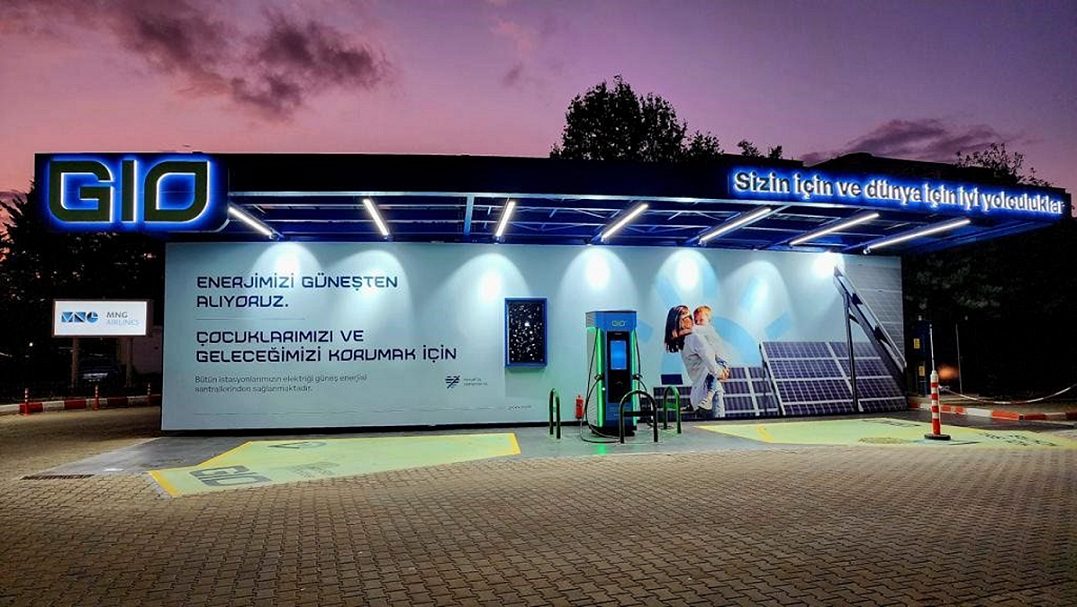
GIOEV, the DBE Holding company that has brought Türkiye's fastest charging stations online, is expanding its charging network to 15 stations by the end of March. The company has invested approximately TL 142 million in these stations and in the procurement of main components for the stations to follow.
DBE Holding Chairman of the Board Mehmet Taha Pınar said they aim to reach 50 stations by the end of the summer and expect total investment to exceed TL 235 million once these stations come online. His remarks offer important insights into what growing a network built on high-power fast-charging stations requires in terms of infrastructure and financing.
From Yeşilköy to Samsun
GIOEV opened its first station on October 26, 2022 at the WOW Hotel next to the İstanbul Expo Center. Following the first 300 kW fast-charging station to go live in Türkiye, the İzmir Balçova Selway Outlet West and East, Antalya Manavgat, Kaş and Alanya, İzmir Selçuk, Aydın Söke, Muğla Ula, Gaziantep Şehitkamil Askoçlar South and North, Mersin Silifke and Tarsus, Amasya Merzifon and Samsun İlkadım stations were brought online. Opening the first station at a hotel next to the İstanbul Expo Center means the charging point meets usage patterns in which vehicles stay parked for a while, such as hotel stays and trade fair visits.
The geographic distribution of the stations gives an idea of how the network is designed. Locations in İzmir, Aydın and Muğla in the Aegean; Antalya and Mersin on the Mediterranean; Gaziantep in Southeastern Anatolia; and Amasya and Samsun in the Black Sea region show that the network is spread across different regions rather than concentrated in a single city. This distribution matters because it gives EV drivers access to fast charging not only within cities but also when traveling between regions.
Some of the locations are in regions that stand out for tourism. Antalya's Manavgat, Kaş and Alanya districts lie on the Mediterranean coast, where traffic rises sharply during holiday periods. On these seasonally busy trips, the availability of fast charging along the route becomes a decisive factor for drivers planning a holiday by electric vehicle.
A high-power charging hub in İzmir Balçova
With a total of five 300 kW units in both directions of travel at the Selway Outlet on the highway, the İzmir Balçova hub, with 1,500 kW of electrical power and 5,000 kVA of transformer capacity, became the highest-power charging hub owned by a single company.
Having separate stations for each direction of travel provides significant convenience for highway charging. Not having to cross to the opposite side or leave the route to charge directly affects the duration and planning of a trip. Choosing an outlet center beside the highway also lets charging time coincide with the need for a break; drivers can shop and rest while their vehicles charge.
The relationship between the hub's electrical power and its transformer capacity is also noteworthy. Running several high-power units at full power simultaneously requires a grid connection and transformer capacity to match. Keeping transformer capacity above the total power of the units can mean the infrastructure can serve without strain at times of heavy use and leaves headroom for possible future needs.
The infrastructure behind high power
Pınar explained that the 300 kW units need to be supported by high-power transformers and suitable electrical panels, which is why the investment requires substantial capital and know-how. High-power DC charging is not a load that an ordinary electrical connection can handle. Such stations are generally designed together with a transformer fed from the medium-voltage grid, panels that handle protection and distribution functions, and the cable infrastructure connecting them.
Noting that $7.5 million has been invested to date, including units, transformers, panels, infrastructure, software and branding work, Pınar said this amount will reach $13 million once the first phase of 50 stations is complete. Listing the investment items in this way shows that a charging network is not made up of the devices in the field alone. The fact that the investment of approximately TL 142 million covers not only the existing stations but also the procurement of main components for subsequent stations shows that growth is backed by a supply structure planned in advance.
Software is the invisible but indispensable layer of the charging network. Remote monitoring of stations, management of charging sessions and user access to stations all take place through this layer. Branding work, meanwhile, becomes part of the investment as the element that ensures the network is recognized and chosen by users. Construction and electrical work on the infrastructure side is also shaped by the specific conditions of each location.
510 stations by 2029
GIOEV's target for 2029 is 510 fast-charging stations spread across Türkiye. The first phase, which envisions reaching 50 stations by the end of the summer, is the first step toward this long-term goal. The target envisions extending the network's current regional distribution to a much wider geography.
A fast-charging network spread across the country is one of the decisive infrastructures for the widespread adoption of electric vehicles. When choosing a vehicle, whether reliable charging points are available along the routes drivers will take matters as much as range. A denser network makes charging easier to plan and brings trips made by electric vehicle closer to the experience of trips made with internal combustion vehicles.
A network growing with high-power stations brings transformer, panel and infrastructure investments with every new location. The network's pace of expansion is therefore directly linked not only to the number of stations but also to the electrical infrastructure that must be provided at each location. The need for capital and know-how that Pınar emphasized also explains the background of a target on this scale.
Range anxiety on intercity trips
Pınar said that with stations going live on busy highways, range anxiety on intercity trips will come to an end. Range anxiety refers to EV drivers' worry that the battery will run out during a trip or that they will not be able to find a suitable charging point when they need one.
This worry becomes especially pronounced outside the city. While charging points at home, at work or nearby are often sufficient for daily use within the city, on long trips drivers need to be able to rely on charging points along the route. High-power stations take on particular importance here, because the length of the charging stop directly affects the total duration of the trip.
Fast-charging stations on busy highways have the potential to turn EV travel from a planning problem into an ordinary rest-stop routine. The highway location in İzmir Balçova and the stations along coastal routes are among the examples of this approach in the field.
Solar investment on 228 decares of land
Pınar said that alongside the charging stations, work on solar power plants is also continuing. 228 decares of land were purchased in regions with high irradiation, and applications were filed for solar power plants with a total capacity of 9,560.19 / 7,985 kWe. The plants are targeted to start operating at the end of the summer, in parallel with consumption.
Addressing the charging network and solar power plant investments together has the potential to increase the environmental benefit of electric mobility. The environmental gain provided by electric vehicles is closely linked to how the electricity they use is generated. Generating energy from renewable sources to match the energy consumed at charging stations makes this gain more meaningful.
In solar power plant investments, land is selected based on technical criteria such as grid connection options and the slope and orientation of the land, in addition to the level of irradiation. Purchasing the land and filing the application are among the first steps that move plant projects into the permitting and connection processes.
The goal of bringing the plants online in parallel with consumption indicates that the growth of the charging network and generation capacity are being planned together. Choosing regions with high irradiation aims to make the most of solar irradiation, the main determinant of efficiency in solar power plants. This approach, which brings charging infrastructure together with renewable energy generation, forms the environmental dimension of the announced growth plan.