Türkiye's fastest EV charging station installed in İstanbul
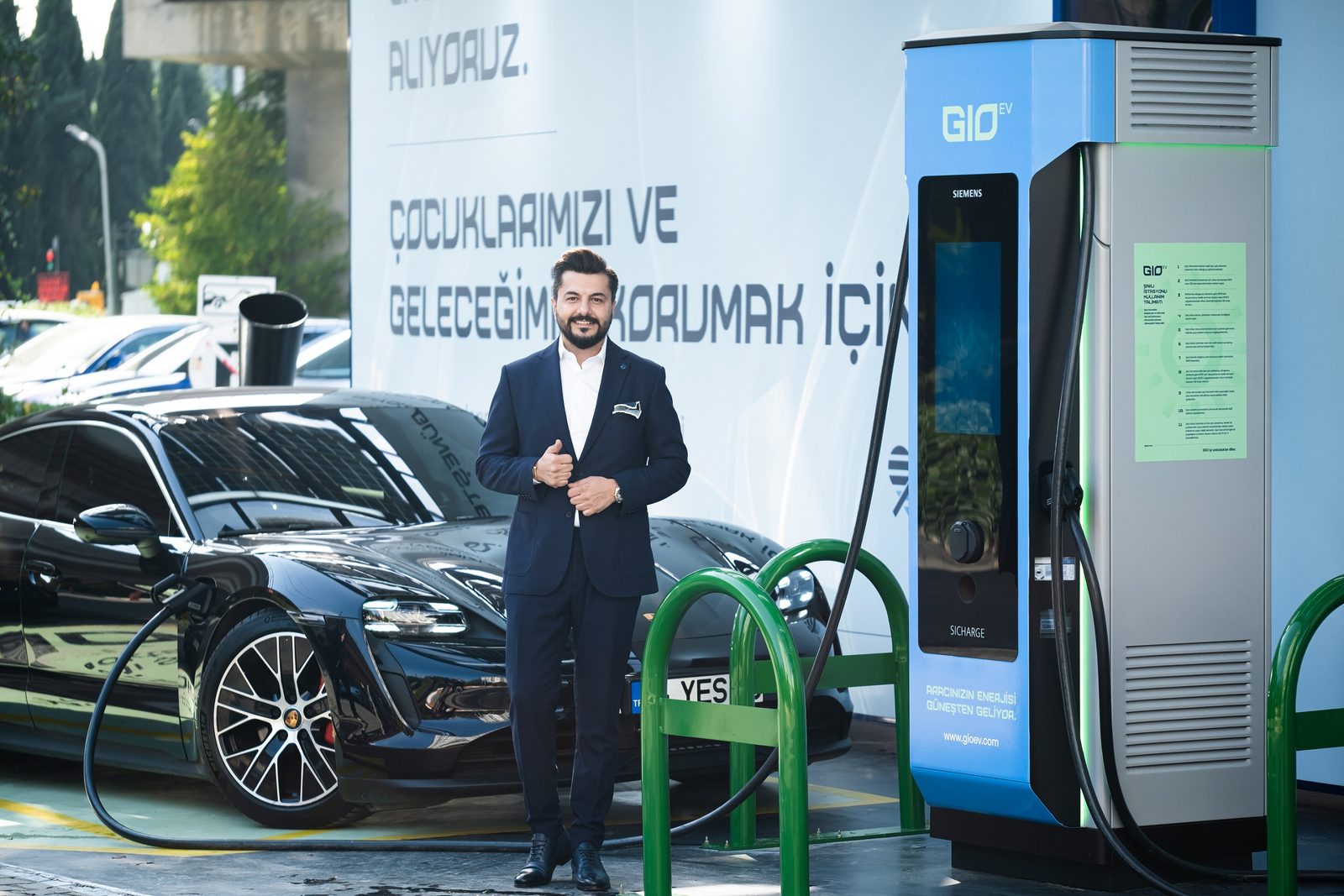
DBE Holding has taken an important step toward solving the problem of long charging times for electric cars with its subsidiary brand GIOEV. Installed in front of WOW Hotel İstanbul in İstanbul Yeşilköy, the station became Türkiye's first electric car charging station to offer 300 kW of output power and draw its energy from 100 percent renewable sources.
Depending on the vehicle's charging acceptance power, the station can fully charge an electric car with a 500 km range in about 25 minutes.
The 300 kW threshold in fast charging
DBE Holding Chairman of the Board Mehmet Taha Pınar said that the fastest charging in Türkiye had been provided at 180 kW and that with GIOEV they had raised this to 300 kW.
Charging power determines the amount of energy that can be delivered to an electric vehicle per unit of time. As output power increases, the time needed to deliver the same amount of energy to the vehicle decreases. However, making use of the full power the station offers depends on the vehicle also being able to accept charging at that level. This is why the station's ability to fully charge a car with a 500 km range in about 25 minutes is stated as depending on the vehicle's charging acceptance power.
In high-power DC charging, energy is converted to direct current inside the station and delivered directly to the battery. Throughout charging, the vehicle's battery management system communicates with the station to determine the power appropriate to the battery's temperature and state of charge. A high output power such as 300 kW therefore means capacity that can serve both today's vehicles and new-generation vehicles that accept higher charging power.
As Pınar noted, at a time when the fastest charging in Türkiye was provided at 180 kW, the 300 kW station represented a marked leap. For users, this difference translates into shorter waiting times, especially for vehicles that support high charging power, and into the station's ability to deliver more energy in the same amount of time.
Charging with energy from the sun
Pınar stated that a solar power plant investment had been made on a 15-decare site solely for this station, and emphasized that the service is offered as carbon neutral and that this can be certified. Pınar explained that GIOEV is not just a charging project but has established a completely green cycle in which electric vehicles are powered by solar energy.
The environmental benefit of electric vehicles depends largely on how the electricity they use is generated. Although a vehicle produces no exhaust emissions in use, if part of the electricity drawn from the grid comes from fossil sources, indirect carbon emissions occur. Supplying the charged energy from renewable sources makes the environmental benefit of EV use hold true along the entire chain, from generation to consumption.
Addressing the solar power plant and the charging station within the same investment structure is a concrete example of this approach. Being able to certify the service as carbon neutral means that the environmental impact becomes measurable and reportable for drivers and corporate fleets. For companies with sustainability targets, such certified green services are important for tracking their carbon footprint.
The concept of a carbon-neutral service refers to bringing the net impact down to zero by reducing the carbon emissions an activity causes and offsetting the remaining emissions. In a charging service, the most direct way to achieve this goal is to generate the energy delivered to the vehicle from renewable sources.
A complementary station network
Pınar announced that, following the first station, they aimed to reach 52 stations within 3 months, a total of 156 stations within 6 months and 400 stations in 2024.
According to Pınar, the stations will be positioned to complement one another from south to north. In the first phase, around 52 stations will be installed in provinces such as İstanbul, İzmir, Hatay, Sivas, Konya and Ankara, with locations also on the İstanbul-İzmir highway and the Northern Marmara Motorway.
In fast charging networks, the location of stations is as decisive as installed capacity. Stations placed to complement one another on intercity routes allow drivers to plan their journeys by anticipating the next charging point. While stations in major cities meet daily needs, points on main highways and motorways make long-distance travel by electric vehicle more accessible.
Targeting provinces spread across different geographic regions together with main highway and motorway links shows that the network is planned to serve both urban and intercity use.
One station worth 60
Of the approximately 3,500 commercial charging stations in Türkiye, 92 percent have an output power of 22 kW and fill a car in 6 hours on average. At 120 and 180 kW fast charging stations, this time drops to about 2 hours. Pınar said that 60 stations of 22 kW could be installed for the cost of one GIOEV station, with the biggest difference between them being the 25-minute charging time.
Relatively low-power stations such as 22 kW units generally offer AC charging and are suitable for places where vehicles stay parked for long periods. At these stations, charging power is also limited by the capacity of the vehicle's onboard charger. Fast charging stations, on the other hand, are designed to deliver large amounts of energy during short stops and stand out especially for drivers with time constraints while traveling.
Beyond the user experience, the difference in charging time also directly affects the station's capacity. Charging sessions completed in a short time mean that the same station can serve many more vehicles during the day. Despite the high investment cost, the value of fast charging stations comes from this usage capacity and the time they save drivers.
For drivers, the difference between 6 hours and 25 minutes fundamentally changes how charging is planned. While long charging sessions require the vehicle to stay in one place for hours, fast charging becomes a stop that can fit into a short break.
The role of fast charging in the city
The station's location in front of a hotel in İstanbul Yeşilköy also sets an example of urban fast charging. In major cities, stations that offer charging in a short time are a practical way to meet daily transportation needs for EV users without charging access at home or at work.
Fast charging stations located at accommodation and visitor destinations such as hotels can serve both guests and drivers passing through the area. In high-use scenarios such as taxis, car rentals and corporate fleets, shorter charging times directly increase the time a vehicle can stay on the road during the day.
By making EV ownership accessible even to those without home charging, urban fast charging helps spread the transition to electric vehicles to wider segments of society. In this respect, high-power stations in major cities stand out as part of an integrated network together with points on intercity routes.
Placing urban fast charging points in visible locations also allows drivers who have not yet switched to electric vehicles to become familiar with charging infrastructure. This visibility indirectly contributes to greater awareness of electric vehicles.
Contribution to the economy and the environment
When the project is fully implemented, it is expected to prevent 1.15 million tons of carbon emissions and to have a positive impact of 0.2 percent on Türkiye's carbon emissions. Electricity generated by the solar power plants to be installed at the charging stations will be used, providing annual savings of $147 million without placing an additional consumption burden on the state.
Pınar also announced that they would complete a 23 MW SPP investment by the end of 2023.
The spread of electric vehicles creates a new item in electricity demand. Meeting the energy needed for charging from solar power plants integrated into the stations is an approach that aims to ease the impact of this additional demand on the grid. Since solar energy is a domestic and renewable resource, the electricity generated in this model can also help reduce dependence on imported energy sources.
The transportation sector is one of the major sources of carbon emissions. Replacing fossil-fuel vehicles with electric vehicles charged with renewable energy is seen as an effective way to reduce these emissions. GIOEV's first station in Yeşilköy was the first concrete step of this approach, which combines charging infrastructure with renewable energy generation.